Navratri 2026: History, Mythology, 9 Days of Goddess Worship, Colors, Fashion, Rituals & Fasting
Introduction
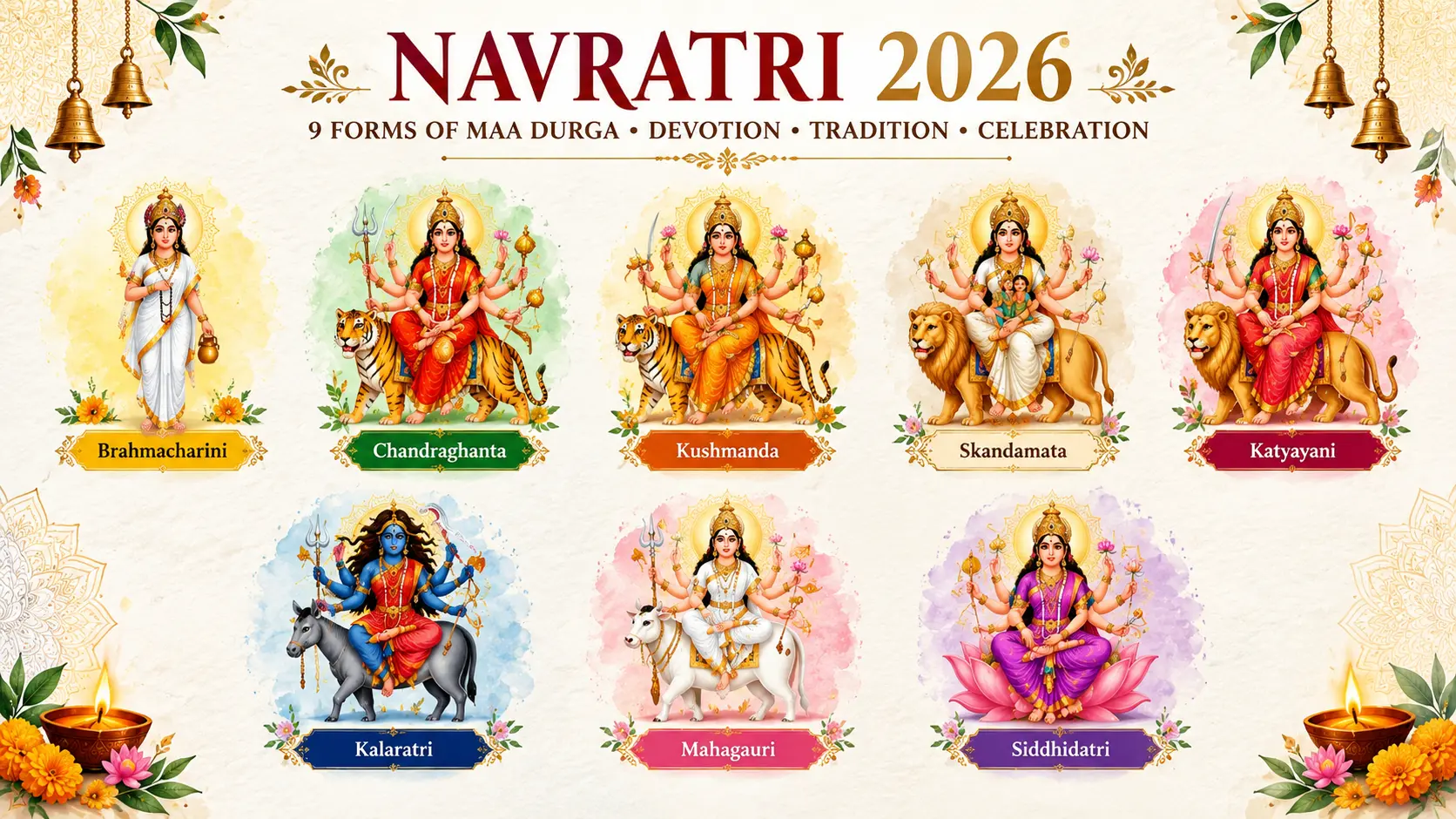
Navratri is one of India’s most celebrated Hindu festivals, symbolizing the victory of good over evil and the divine power of Goddess Durga. The Sanskrit word Navratri means “nine nights.” During this festival, devotees worship the nine forms of Goddess Durga, collectively known as Navadurga, through prayers, fasting, puja rituals, Garba, Dandiya, and cultural celebrations.
Sharad Navratri 2026 begins on Sunday, October 11, and the nine days of worship continue through Monday, October 19. Vijayadashami (Dussehra) falls on Tuesday, October 20, 2026. Regional calendars and local observances may vary. Source: Drik Panchang.
Navratri is more than a religious festival. It is a celebration of faith, tradition, music, dance, family, and fashion. From traditional Navratri lehengas and chaniya cholis to elegant kurtas and colorful accessories, people across India prepare to celebrate these nine auspicious nights in style.
In this guide, discover the history and mythology of Navratri, the nine forms of Goddess Durga, the 2026 Navratri colors, fasting traditions, regional celebrations, rituals, and festive outfit ideas.
History and Mythology of Navratri
The Legend of Goddess Durga and Mahishasura
According to Hindu mythology, Mahishasura was a powerful demon who received a boon that made him difficult to defeat. As his power grew, he threatened the gods and disrupted the balance of the universe.
To restore order, the divine energies of the gods united to manifest Goddess Durga, who was equipped with divine weapons and extraordinary strength. After a fierce battle, Goddess Durga defeated Mahishasura, symbolizing the triumph of good over evil.
The story is central to the spiritual significance of Navratri and the celebration of Goddess Durga’s courage, strength, and divine power.
Lord Rama’s Connection with Navratri
Another important tradition connects Navratri with Lord Rama and the Ramayana. According to popular religious tradition, Lord Rama worshipped Goddess Durga before his battle against Ravana. His eventual victory represents the triumph of dharma over adharma.
These stories give Navratri its enduring message: righteousness, courage, devotion, and perseverance can overcome evil.
Navratri 2026 Dates: Nine Days of Goddess Worship
Sharad Navratri 2026 begins on October 11 and concludes with the ninth day of worship on October 19. Vijayadashami follows on October 20.
Each day is associated with a particular form of Goddess Durga.
| Day | Date | Goddess | Significance |
|---|---|---|---|
| Day 1 | October 11, Sunday | Maa Shailputri | Strength and new beginnings |
| Day 2 | October 12, Monday | Maa Brahmacharini | Devotion and discipline |
| Day 3 | October 13, Tuesday | Maa Chandraghanta | Courage and protection |
| Day 4 | October 14, Wednesday | Maa Kushmanda | Creation and vitality |
| Day 5 | October 15, Thursday | Maa Skandamata | Motherhood and compassion |
| Day 6 | October 16, Friday | Maa Katyayani | Courage and determination |
| Day 7 | October 17, Saturday | Maa Kalaratri | Protection and the destruction of evil |
| Day 8 | October 18, Sunday | Maa Mahagauri | Purity and peace |
| Day 9 | October 19, Monday | Maa Siddhidatri | Spiritual fulfillment and wisdom |
| Vijayadashami | October 20, Tuesday | Celebration of victory | The triumph of good over evil |
The goddess names and their traditional associations reflect widely observed Hindu traditions. The exact observance of certain rituals may vary by region and family tradition.
Navratri 2026: Nine Colors and Outfit Ideas
Wearing a designated color for each day of Navratri is a popular tradition, particularly in Gujarat and Maharashtra. The colors below follow the commonly published 2026 weekday-based color sequence. Individual communities may follow different color lists.
| Day | Date | Navratri Color | Outfit Inspiration |
|---|---|---|---|
| Day 1 | October 11 | Orange | Orange chaniya choli or kurta |
| Day 2 | October 12 | White | White lehenga or embroidered outfit |
| Day 3 | October 13 | Red | Red traditional attire |
| Day 4 | October 14 | Royal Blue | Blue mirror-work lehenga |
| Day 5 | October 15 | Yellow | Yellow kurta or festive chaniya choli |
| Day 6 | October 16 | Green | Green Bandhani or embroidered attire |
| Day 7 | October 17 | Grey | Grey Indo-western outfit |
| Day 8 | October 18 | Purple | Purple lehenga or saree |
| Day 9 | October 19 | Peacock Green | Peacock-green festive ensemble |
Color traditions are an enjoyable way to express festive spirit. Choose comfortable clothing that suits your personal style and the occasion.
Regional Celebrations of Navratri
Navratri is celebrated in different ways throughout India, with regional customs, music, food, and rituals.
Gujarat and Maharashtra: Garba and Dandiya
Gujarat is famous for its energetic Garba and Dandiya Raas celebrations. Participants gather in colorful traditional outfits to dance to devotional songs and folk music. Chaniya cholis, kediyus, mirror-work embroidery, and traditional jewelry are popular choices.
Maharashtra also celebrates Navratri with devotional gatherings, community events, and festive cultural programs.
West Bengal: Durga Puja
In West Bengal, Durga Puja is one of the most important annual festivals. Elaborate pandals, artistic idols of Goddess Durga, cultural performances, devotional music, and community gatherings mark the celebrations.
North India: Fasting and Ramlila
In many parts of North India, devotees observe fasts, visit temples, recite devotional texts, and participate in Ramlila performances. The festivities culminate in Dussehra celebrations.
South India: Golu and Traditional Worship
In Tamil Nadu and other southern regions, Navratri is associated with the Golu or Bommai Golu tradition, in which dolls and figurines are arranged in decorative displays. Families welcome visitors, sing devotional songs, and offer traditional foods.
These regional traditions highlight the cultural diversity of India’s Navratri celebrations.
Navratri Fasting and Food Traditions
Many devotees observe a fast during Navratri as an expression of devotion and self-discipline. Fasting practices differ among households, communities, and individuals.
Depending on the tradition, devotees may avoid grains, onion, garlic, or particular ingredients while choosing suitable fasting foods.
Popular Navratri fasting dishes include:
-
Sabudana khichdi
-
Singhara atta puri
-
Kuttu ke pakode
-
Makhana kheer
-
Vrat-friendly potato dishes
-
Fresh fruits and yogurt
People observing a fast should choose foods that meet their individual dietary needs and their family’s religious customs.
Related reading idea: Create a separate article featuring 10 Easy Navratri Vrat Recipes for 2026 and link it here to help readers discover more recipes.
Important Navratri Rituals
1. Ghatasthapana
Ghatasthapana, also known as Kalash Sthapana, marks the beginning of Navratri worship in many traditions. A sacred pot is established according to the family’s customary rituals.
2. Daily Durga Puja and Aarti
Devotees offer flowers, lamps, incense, and prayers to Goddess Durga. Daily aarti and devotional songs are common parts of household and temple worship.
3. Durga Saptashati Recitation
Some devotees recite the Durga Saptashati or other devotional texts dedicated to Goddess Durga during the festival.
4. Kanya Pujan
Kanya Pujan, also known as Kanjak Puja in some regions, involves honoring young girls as symbolic representations of the divine feminine. It is commonly observed on Ashtami or Navami, depending on family and regional traditions.
5. Havan and Vijayadashami
Many families conclude their Navratri worship with a havan or other customary prayers. Vijayadashami celebrates the victory of good over evil and marks the conclusion of the festival in many traditions.
For exact puja timings, consult a reliable local Panchang because auspicious timings can differ by city.
Navratri 2026 Fashion and Outfit Trends
Navratri is a special time to celebrate Indian craftsmanship, colorful textiles, and festive fashion. Garba and Dandiya nights offer opportunities to combine traditional attire with contemporary styling.
Navratri Outfit Ideas for Women
Women can choose from chaniya cholis, lehengas, sarees, and Indo-western outfits.
Popular styling ideas include:
-
Mirror-work chaniya cholis with colorful dupattas.
-
Bandhani lehengas inspired by Gujarati textile traditions.
-
Embroidered crop-top lehengas for a contemporary look.
-
Traditional oxidized silver jewelry, bangles, and statement earrings.
-
Comfortable footwear suitable for long Garba sessions.
Choose lightweight fabrics and secure accessories so that your outfit remains comfortable while dancing.
Navratri Outfit Ideas for Men
Men can celebrate in traditional and modern ethnic wear, including:
-
Kediyu with a dhoti or traditional trousers.
-
Kurta-pajama with a Nehru jacket.
-
Embroidered waistcoats with simple kurtas.
-
Comfortable traditional footwear.
-
Coordinated outfits that match the day’s festive color.
Navratri Outfit Ideas for Kids
For children, lightweight and breathable fabrics are ideal. Colorful lehenga cholis, kurta-pajamas, traditional jackets, and festive frocks can make celebrations enjoyable without restricting movement.
Parents should prioritize comfort, secure accessories, and footwear suitable for dancing.
How to Style Your Navratri Look
You do not need an entirely new outfit for every day. Combine existing ethnic wear with different dupattas, jewelry, jackets, footwear, or accessories to create fresh looks.
For more inspiration, read our related guide: Navratri Lehengas and Chaniya Cholis: Festive Outfit Trends.
Editorial note: Update the destination article’s title and content to 2026 if you maintain it as a yearly fashion guide. If the 2025 page already attracts visitors, preserve its existing URL and refresh it rather than creating a duplicate without a clear reason.
Frequently Asked Questions About Navratri 2026
When does Navratri start in 2026?
Sharad Navratri begins on Sunday, October 11, 2026.
When does Navratri end in 2026?
The ninth day of Navratri falls on Monday, October 19, 2026. Vijayadashami or Dussehra follows on Tuesday, October 20, 2026.
What are the nine Navratri colors for 2026?
The commonly published color sequence is orange, white, red, royal blue, yellow, green, grey, purple, and peacock green. Some regional traditions may use a different sequence.
Which goddess is worshipped on each day of Navratri?
The nine forms are Maa Shailputri, Maa Brahmacharini, Maa Chandraghanta, Maa Kushmanda, Maa Skandamata, Maa Katyayani, Maa Kalaratri, Maa Mahagauri, and Maa Siddhidatri.
Why do people fast during Navratri?
Many devotees fast as an expression of faith, self-discipline, and spiritual commitment. Fasting rules and permitted foods differ among traditions and individuals.
What should I wear during Navratri 2026?
Traditional options include chaniya cholis, lehengas, sarees, kediyus, and kurta-pajamas. Many people also choose outfits matching the day’s designated color.
How is Navratri celebrated in Gujarat?
Gujarat is particularly known for Garba and Dandiya Raas, devotional music, community celebrations, and colorful traditional attire.
Conclusion
Navratri 2026 is a celebration of devotion, cultural heritage, music, dance, and the triumph of good over evil. From worshipping the nine forms of Goddess Durga to observing fasting traditions and enjoying Garba and Dandiya, the festival brings communities together across India.
Whether you are planning your daily puja, choosing a fasting recipe, or selecting your festive outfit, Navratri offers many ways to connect with tradition and celebrate Indian culture.
May this Navratri bring peace, happiness, strength, and prosperity to you and your family. Happy Navratri 2026! Jai Mata Di!
📖 Next Blog: Continue Reading on My Daily Viral
Want to keep exploring the latest trending topics, guides, and updates? Check out our other popular blogs below 👇
🎬 Entertainment & Movies
-
🇮🇳 Battle of Galwan Movie 2026: Salman Khan’s Powerful War Drama Based on Real Events
📱 Technology & Gadgets
👗 Fashion & Festivals
-
🧘 Health & Lifestyle

