Bandhani: Gujarat’s Traditional Tie-Dye Art Explained
Gujarat is famous for its colourful textiles, and Bandhani is one of its most beautiful traditional crafts. This distinctive tie-dye art transforms plain fabric into vibrant patterns using tiny knots, colourful dyes, and skilled handwork.
From bright wedding sarees and traditional dupattas to modern kurtas, scarves, and dress materials, this textile tradition remains an important part of Gujarati culture. Its colourful patterns reflect generations of craftsmanship and regional identity.
In this guide, discover the history of Bandhani, how the traditional technique works, seven popular designs, and where to buy authentic tie-dye textiles in Gujarat.
What Is Bandhani?
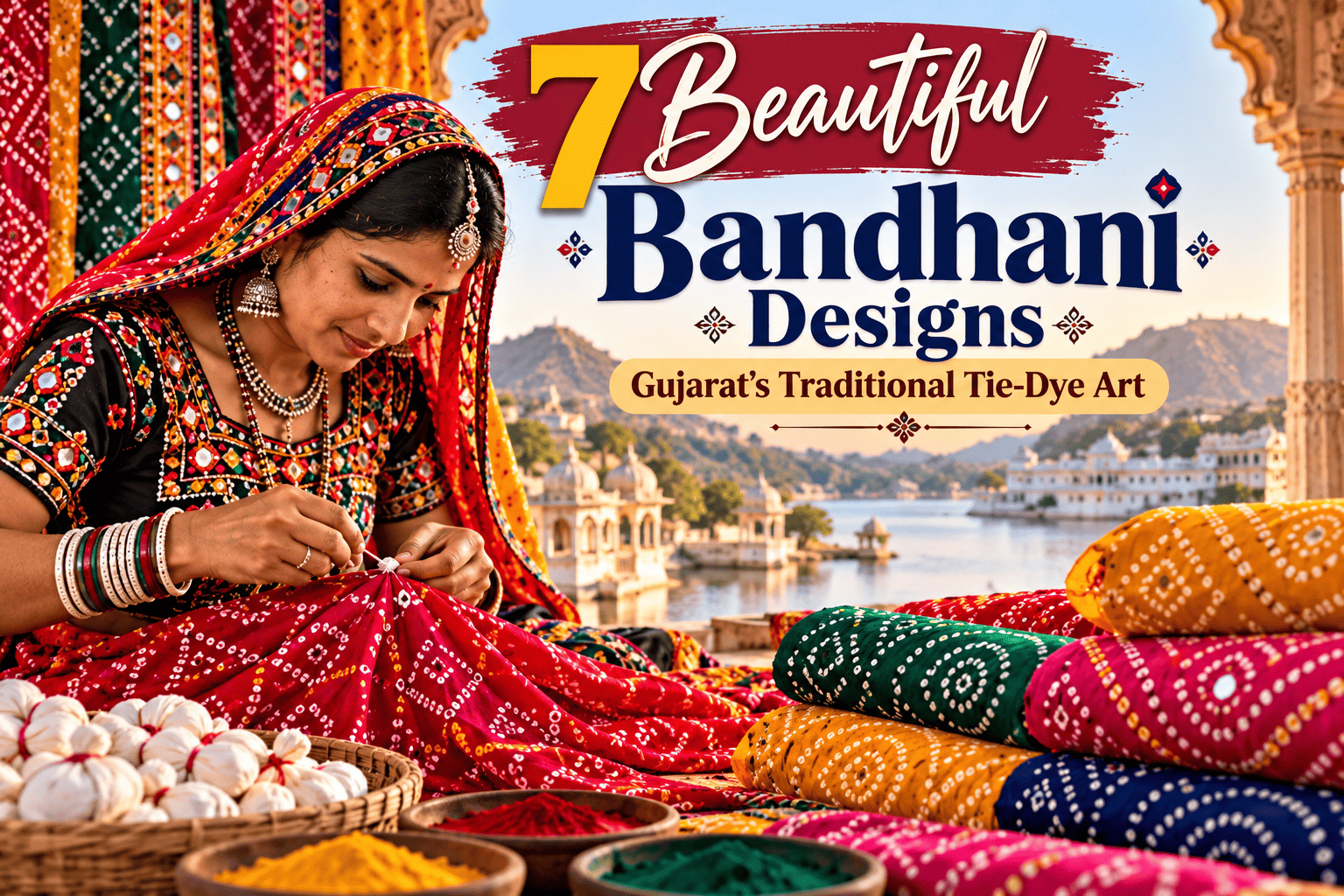
Also known as Bandhej, this traditional tie-dye technique involves tightly tying small portions of fabric before dyeing it. The tied sections resist the dye, creating distinctive dots, circles, waves, and decorative patterns when the knots are removed.
The name comes from the Sanskrit root bandh, meaning “to tie.” Depending on the design, artisans may create thousands of tiny knots across a single piece of fabric.
The finished textiles are used for sarees, odhanis, dupattas, turbans, kurtas, and contemporary fashion accessories.
History of Gujarat’s Tie-Dye Tradition
Origins and cultural heritage
Tie-dyeing has a long history in South Asia. Over generations, textile artisans in Gujarat and neighbouring Rajasthan developed regional techniques, colour combinations, and distinctive patterns.
In Kutch, the Khatri community has played an important role in preserving this craft. The region’s textile traditions developed through the knowledge and skills passed between generations of artisans.
A part of Gujarati celebrations
Colourful tie-dyed textiles are associated with weddings, festivals, religious occasions, and traditional clothing.
Gharchola, for example, is a ceremonial textile associated with Gujarati Hindu and Jain weddings. Its grid-like patterns and decorative motifs give it a distinctive appearance.
Red is often chosen for bridal garments, while other colours and patterns vary according to local traditions and personal preferences.
Jamnagari Bandhani
Jamnagar is one of Gujarat’s important production centres for this textile craft. Jamnagari Bandhani has received Geographical Indication (GI) recognition, connecting the product with its regional identity and traditional production.
Kutch is another important centre, known for its own established textile traditions.
How Is the Traditional Technique Practised?
Creating a detailed tie-dyed textile requires patience, planning, and precision.
- Fabric selection: Artisans select a suitable fabric, such as cotton, silk, or another dye-compatible material.
- Design planning: The intended pattern is marked or planned according to the desired arrangement of dots and motifs.
- Tying the fabric: Small sections are pinched and tightly bound with thread. These areas resist the dye.
- Dyeing: The fabric is immersed in a dye bath. Multicoloured designs may require several rounds of tying and dyeing.
- Removing the knots: Once the fabric is dry, the ties are removed to reveal the lighter sections beneath them.
- Finishing: The textile is inspected and prepared for use as a garment, accessory, or decorative product.
The time required depends on the complexity of the design, the number of knots, the fabric, and the dyeing process. Traditional handwork can be considerably more time-consuming than machine printing.
7 Beautiful Bandhani Designs and Styles
1. Ekdali
Ekdali is associated with individual dots or small tied units arranged across the fabric. The result can be delicate and understated or form part of a more elaborate composition.
2. Mothra
Mothra is associated with a checked or criss-cross visual effect. Its structured arrangement creates a distinctive pattern compared with simple dotted designs.
3. Shikari
Shikari designs are associated with figurative or scene-inspired motifs. Traditional examples may incorporate decorative elements inspired by nature and everyday life.
4. Gharchola
Gharchola is a ceremonial textile traditionally associated with Gujarati weddings. Its grid-like layout and auspicious motifs make it especially significant in bridal clothing.
5. Chandrokhani
Chandrokhani is associated with traditional bridal textiles in Kutch, particularly Muslim bridal wear. Its designs reflect the region’s diverse cultural and textile heritage.
6. Bavan Baug
Bavan Baug is a traditional design name associated with Gujarat’s tie-dye heritage. It is known as part of the region’s vocabulary of established textile patterns.
7. Butiyo
Butiyo is another traditional design name documented in Jamnagar. Dotted motifs can be arranged in different combinations, creating patterns ranging from simple to highly decorative.
Specific names and styles may vary across artisan communities and local traditions.
Where Is This Craft Made in Gujarat?
Jamnagar
Jamnagar is widely recognised for its regional tie-dye production. Visitors can explore traditional textile shops and look for sarees, dress materials, odhanis, and other colourful products.
The Darbargadh and Chandi Bazar areas are mentioned among local shopping areas in district tourism information. Check current shop locations and opening hours before travelling.
Kutch and Bhuj
Kutch has a long history of textile craftsmanship. Bhuj can serve as a convenient base for exploring local textile shops, craft outlets, and artisan-led businesses.
Visitors interested in handmade products should ask sellers about the production process and the origin of each piece.
Anjar
Anjar is another place associated with traditional tie-dye production in Gujarat. Local sellers may offer garments, dress materials, and other regional textiles.
Availability varies, so confirm product selections and shop details before making a special trip.
Ahmedabad
Ahmedabad has many textile and ethnic-wear retailers. It can be a convenient option for buyers who want to compare traditional and contemporary designs without travelling to a production centre.
Look for sellers who clearly explain whether their products are hand-tied and dyed, machine-printed, or made using a combination of methods.
Where to Buy Authentic Tie-Dye Textiles
You can explore several types of sellers depending on your budget and the product you need.
- Local textile shops: Visit established stores in Jamnagar, Bhuj, and other craft-producing areas.
- Artisan-led businesses: Where possible, buy directly from makers or organisations that explain how their products are produced.
- Specialist ethnic-wear stores: These are useful for comparing sarees, dupattas, kurtas, and dress materials.
- Online retailers: Check product photographs, fabric specifications, seller reviews, delivery terms, and return policies.
- Government handicraft resources: Visit the official Development Commissioner (Handicrafts) website for information about Indian craft traditions.
You can also explore the Gujarat Tourism website for regional travel and craft information.
Buying tip: A product described as “Bandhani” is not necessarily handmade. Ask whether its pattern is created through tying and dyeing or by printing the design onto the fabric.
How to Identify Good-Quality Products
Before purchasing a saree, dupatta, or dress material, consider these practical checks:
- Examine the pattern: Hand-tied designs may show small natural variations in dot shape and spacing.
- Check the fabric: Confirm whether it is cotton, silk, georgette, or another material.
- Ask about production: Find out whether the textile is handmade, machine-printed, or produced using both methods.
- Inspect the colours: Ask about dye-care instructions and how to wash the garment safely.
- Look at the finishing: Check the borders, edges, stitching, and overall construction.
- Compare prices: Intricate handwork requires time and labour. Ask questions if a product is priced unusually low for the claimed workmanship.
A GI claim should be supported by credible documentation. A seller using a regional craft name alone does not establish authenticity.
Tie-Dye Textiles in Modern Fashion
Traditional Gujarati patterns now appear in a wide range of contemporary clothing and accessories.
Popular choices include:
- Sarees for weddings and festive occasions
- Dupattas for ethnic and everyday outfits
- Kurtas for casual and office wear
- Lehengas and cholis for celebrations
- Stoles and scarves for versatile styling
- Contemporary co-ord sets and fusion garments
For an elegant look, pair a colourful dupatta with a plain kurta. For festive occasions, a richly patterned saree can be combined with simple jewellery so that the textile remains the main attraction.
Why Supporting Traditional Artisans Matters
This textile tradition represents more than a colourful pattern. It preserves specialist skills, local knowledge, and cultural practices passed from one generation to another.
Purchasing from transparent, responsibly sourced businesses can help buyers understand the work behind each garment. When possible, ask who made the textile, where it was produced, and how the design was created.
Supporting craft producers also helps maintain demand for traditional skills while allowing the art form to evolve for modern customers.
Frequently Asked Questions
1. What is Bandhani?
It is a traditional tie-dye technique in which small sections of fabric are tied before dyeing to create decorative patterns. It is also called Bandhej.
2. Which places in Gujarat are known for this craft?
Jamnagar and Kutch are important production centres. Anjar and other parts of Gujarat also have traditional tie-dye practices.
3. What does Bandhani mean?
The name is derived from the Sanskrit root bandh, meaning “to tie,” which describes the knotting technique used in the process.
4. Is traditional Bandhani handmade?
Traditional production involves hand-tying and dyeing. However, machine-printed imitations are also sold, so check the manufacturing method before purchasing.
5. What is Jamnagari Bandhani?
It is a regional textile craft associated with Jamnagar, Gujarat, and has received Geographical Indication recognition.
6. Which colours are commonly used?
Red, yellow, green, blue, and black are common choices. Modern designs also use many additional colours and combinations.
7. Where can I buy authentic products?
Explore established textile shops, artisan-led businesses, specialist ethnic-wear retailers, and online stores that provide clear information about their products.
8. How can I distinguish handmade fabric from printed imitations?
Inspect the pattern closely and ask the seller about the production process. Photographs alone may not be enough to verify authenticity.
Conclusion
Gujarat’s tie-dye heritage combines vibrant colours, skilled craftsmanship, and deep cultural connections. From the regional traditions of Jamnagar to the textile heritage of Kutch, these distinctive patterns continue to inspire bridal clothing, festive outfits, and contemporary fashion.
Whether you are shopping for a saree, a colourful dupatta, or everyday ethnic wear, understanding the production process helps you make a more informed choice. Explore trusted sellers, ask about the origin of each piece, and appreciate the artisans who keep this traditional craft alive.
👗 Fashion & Festivals
-
💃 Navratri Lehengas Chaniya Cholis 2025 – Stunning Trends, Colors & Styling Ideas
-
🪔 Navratri 2025: 9 Days of Goddess, History, Rituals, Fashion & Fasting