Kutch Embroidery: History and Where to Buy Authentic Kutchi Handicrafts
Kutch embroidery is one of Gujarat’s most beautiful traditional textile crafts, celebrated for its vibrant colours, intricate stitches, decorative mirrors, and distinctive cultural motifs. Known locally as Kutchi Bharat, this handmade art reflects the creativity and heritage of the communities of Kutch, a culturally rich region in western Gujarat.
From embroidered blouses and dupattas to handbags, cushion covers, wall hangings, and contemporary fashion accessories, Kutch embroidery has evolved while retaining its traditional character.
If you love Indian handicrafts, this guide explores the history of Kutch embroidery, its traditional styles, how it is made, and where to buy authentic Kutchi embroidery online or directly from artisans.
What Is Kutch Embroidery?
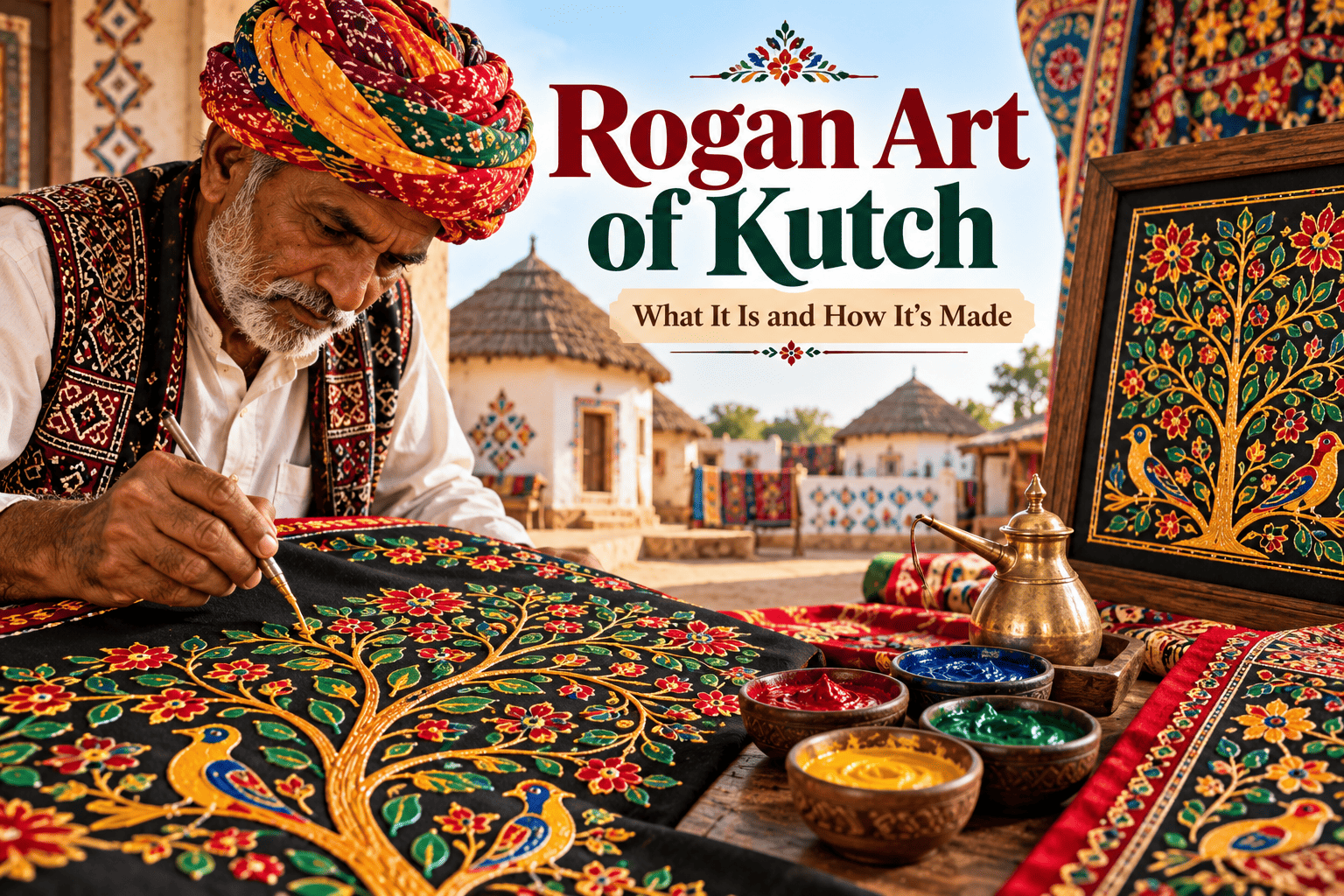
Kutch embroidery is a traditional form of needlework associated with the Kutch region of Gujarat. It is recognised for its detailed geometric and floral patterns, colourful threads, mirror work, and community-specific designs.
Artisans traditionally embroidered clothing, dowry textiles, and household objects. Today, the craft also appears on modern products such as jackets, bags, clutches, accessories, and home décor.
The designs are more than decoration. Different embroidery styles can reflect the identity, customs, and artistic traditions of the communities that practise them.
History of Kutch Embroidery
The history of Kutch embroidery spans generations. Its development is closely connected to the lives, traditions, and cultural exchanges of the region’s pastoral and rural communities.
Traditional roots and community identity
Embroidery was traditionally practised by women to decorate garments, prepare wedding and dowry gifts, and create textiles for family and community occasions. Skills and patterns were passed from one generation to another.
Communities including Rabari, Ahir, Mutwa, Jat, and others developed distinctive approaches to colour, stitches, motifs, and mirror decoration.
From household craft to a recognised art form
For generations, embroidered textiles were primarily created for personal, ceremonial, and household use. Over time, craft organisations, artisan initiatives, exhibitions, and changing fashion trends helped bring Kutch embroidery to wider markets.
The craft now features in both traditional textiles and contemporary designs, allowing artisans to preserve their skills while responding to new customers.
GI registration and cultural significance
Kutch Embroidery received Geographical Indication (GI) registration in 2008. This recognition connects the craft with its geographical origin and cultural heritage. <Cite refs={[“turn758181search22″,”turn758181search8”]}/>
Different Types of Kutch Embroidery
Kutch is home to several embroidery traditions. The following styles demonstrate the region’s artistic diversity.
1. Rabari embroidery
Rabari embroidery is known for bold designs, decorative mirrors, colourful threadwork, and geometric or nature-inspired motifs. Contemporary versions are often used on bags, jackets, blouses, and wall hangings.
2. Ahir embroidery
Ahir embroidery frequently features intricate floral patterns, decorative details, and mirror work. Its motifs and colours create a distinctive appearance suitable for garments and accessories.
3. Suf embroidery
Suf embroidery is a highly detailed, geometric style based on triangular patterns. Artisans count the threads of the fabric to create symmetrical designs, often working from the reverse side without drawing the pattern first.
4. Khaarek embroidery
Khaarek, also written as Khareek, is a geometric style built around carefully counted patterns and bands of stitching. The designs can cover large areas of fabric with structured, symmetrical decoration.
5. Paako embroidery
Paako, meaning solid or firm, is recognised for its dense stitching and floral or geometric motifs. Traditional techniques include square-chain and double-buttonhole stitches, sometimes outlined with contrasting thread.
These styles are not interchangeable: each has its own techniques and visual characteristics. <Cite refs={[“turn758181search1″,”turn758181search0”]}/>
How Is Kutch Embroidery Made?
Authentic Kutchi embroidery is created through a detailed process that requires patience, precision, and experience.
- Fabric preparation: Artisans select a suitable fabric, commonly cotton or silk, depending on the product and technique.
- Pattern planning: The design is drawn or planned by counting the fabric threads, depending on the embroidery style.
- Threadwork: Coloured threads are stitched into intricate patterns using traditional techniques.
- Mirror embellishment: Small decorative mirrors, known as abhla, may be secured into the fabric using carefully arranged stitches.
- Finishing: The textile is checked, loose threads are trimmed, and the finished piece is prepared for use or sale.
The time required depends on the size, complexity, stitch density, and amount of mirror work. Detailed handmade pieces can require considerably more work than simpler designs.
Where to Buy Authentic Kutch Embroidery
If you want to purchase Kutchi embroidery, buying from artisan organisations, established craft outlets, and local makers can help you understand the product’s origin and support traditional craftsmanship.
1. Bhuj, Gujarat
Bhuj is a useful starting point for exploring Kutch’s handicrafts. Look for local craft shops, exhibitions, and artisan-led outlets selling embroidered garments, bags, textiles, and home décor.
Ask sellers about the maker, community style, materials, and whether the work is hand-embroidered.
2. Hodka and the Banni region
Hodka and nearby Banni villages are associated with traditional craft communities. Visiting local artisan homes or organised craft experiences can provide opportunities to see embroidery traditions and purchase products directly, where sales are offered.
Arrange visits respectfully and confirm availability before travelling.
3. Shrujan – Living and Learning Design Centre
Shrujan is associated with preserving and promoting Kutch’s embroidery traditions through artisan-centred initiatives and craft education.
Its Living and Learning Design Centre (LLDC) in the Ajrakhpur area is a useful place to explore the region’s textile heritage. Check its official website for current visitor information and shop availability before visiting.
Official website: https://shrujan.org/
4. Qasab artisan cooperative
Qasab is an artisan-focused organisation associated with embroidery traditions in Kutch. It is worth investigating if you want to explore community-made products and learn about the people behind the craft.
Contact the organisation or check its current official channels to confirm available products, purchase arrangements, and visitor information.
5. Government handicraft outlets and exhibitions
Government handicraft outlets, recognised craft exhibitions, and artisan fairs can offer opportunities to compare traditional embroidery styles and learn about the craft.
The Development Commissioner (Handicrafts) provides official information about Indian handicrafts, including Kutch embroidery:
6. Buy Kutch embroidery online
Online shopping is convenient if you cannot travel to Gujarat. You can explore artisan organisations, craft retailers, and specialist Indian handicraft stores that describe the origin and construction of their products.
Before ordering, check the seller’s reputation, product photographs, material details, return policy, shipping charges, and whether the item is hand-embroidered or machine-made.
Buying tip: Do not assume that every product labelled “Kutch work” is entirely handmade or made in Kutch. Ask the seller for specific details about the product’s origin and production method.
What Can You Buy in Kutch Embroidery?
| Product | Best for |
|---|---|
| Embroidered dupattas | Festive and ethnic outfits |
| Blouses and cholis | Traditional Indian wear |
| Handbags and clutches | Everyday and occasion styling |
| Jackets and shrugs | Contemporary ethnic fashion |
| Cushion covers | Home decoration |
| Wall hangings | Decorative displays and gifts |
| Table runners | Dining and festive décor |
| Small embroidered accessories | Souvenirs and gifting |
Product availability, materials, and prices vary by artisan, design, and amount of handwork.
How to Identify Authentic Kutch Embroidery
Use these practical checks before buying:
- Examine the stitches: Hand embroidery may show small natural variations. Uniform stitching alone does not prove that a product is machine-made, so consider the overall construction.
- Inspect the mirrors: Check how securely the mirrors are attached and whether the surrounding stitches are neat.
- Ask about the maker: A knowledgeable seller should be able to explain the embroidery style and the product’s origin.
- Check the material: Confirm whether the base fabric and threads are cotton, silk, or synthetic materials.
- Compare the price with the work: Dense embroidery and extensive handwork require labour, so unusually low prices deserve closer inspection.
- Request provenance information: A GI label or registration claim should be supported by credible documentation. A seller’s use of the words “traditional” or “Kutchi” alone is not proof of authenticity.
Why Should You Support Kutchi Artisans?
Purchasing responsibly sourced embroidery can help sustain traditional skills and create income opportunities for craft-producing communities.
Each handmade piece represents time, technical knowledge, and a distinctive artistic tradition. Choosing transparent sellers and artisan-led businesses can help buyers make more informed purchases while contributing to the continued appreciation of Gujarat’s handicrafts.
Where possible, learn who made the product, how it was produced, and how the sale benefits the artisan or organisation.
Frequently Asked Questions
1. What is Kutch embroidery famous for?
Kutch embroidery is famous for colourful threadwork, intricate patterns, mirror decoration, and traditional styles associated with different communities in Gujarat.
2. Which state is famous for Kutch embroidery?
Kutch embroidery originates in the Kutch region of Gujarat, India.
3. When did Kutch embroidery receive GI registration?
Kutch Embroidery received Geographical Indication registration in 2008. <Cite refs={[“turn758181search22″,”turn758181search24”]}/>
4. Where can I buy authentic Kutch embroidery?
You can explore artisan outlets and craft organisations in and around Bhuj, Hodka, and Ajrakhpur, as well as reputable handicraft retailers and online sellers. Confirm current shop availability before visiting.
5. Is Kutch embroidery handmade?
Traditional Kutch embroidery is a hand-needlework craft. However, products sold under the same label may vary, so ask the seller whether the specific item is fully hand-embroidered, machine-made, or a combination.
6. What products are made using Kutch embroidery?
Products include traditional garments, dupattas, blouses, bags, jackets, cushion covers, wall hangings, table runners, and decorative accessories.
7. How can I check whether Kutch embroidery is authentic?
Ask about the artisan, place of production, embroidery style, materials, and production method. Examine the stitching and buy from sellers who provide clear product information.
Conclusion
Kutch embroidery is more than a decorative textile technique; it is an enduring expression of Gujarat’s cultural identity and artisan heritage. Its colourful threads, intricate stitches, and distinctive mirror work continue to inspire traditional clothing, contemporary fashion, and home décor.
Whether you explore craft outlets in Bhuj, visit artisan communities in Kutch, or shop through a reputable online seller, take time to understand the work behind each piece. Buying thoughtfully can help you enjoy a beautiful handmade product while supporting the people who keep this remarkable craft alive.
📖 Next Blog: Continue Reading on My Daily Viral
Want to keep exploring the latest trending topics, guides, and updates? Check out our other popular blogs below 👇
🎬 Entertainment & Movies
-
🇮🇳 Battle of Galwan Movie 2026: Salman Khan’s Powerful War Drama Based on Real Events
📱 Technology & Gadgets
-
📱 Amazing iPhone 17 Series (2025) – Full Review, Top Features & Price in India
-
☁️ What is Cloud Computing? Beginner’s Guide (AWS, Azure, GCP Explained)
🏏 Sports & Cricket
-
🏏 Top 20 Indian Cricketers 2025: The Heroes Who Define the New Era of Cricket
-
🌍 Cricket 2025: Exciting New Rules, Smart Tech & Global Game Evolution
👗 Fashion & Festivals
-
💃 Navratri Lehengas Chaniya Cholis 2025 – Stunning Trends, Colors & Styling Ideas
-
🎉 Explore 2025 Festival & Wedding Fashion in India – For Men, Women & Kids
-
🪔 Navratri 2025: 9 Days of Goddess, History, Rituals, Fashion & Fasting
https://myhandicraftindia.com