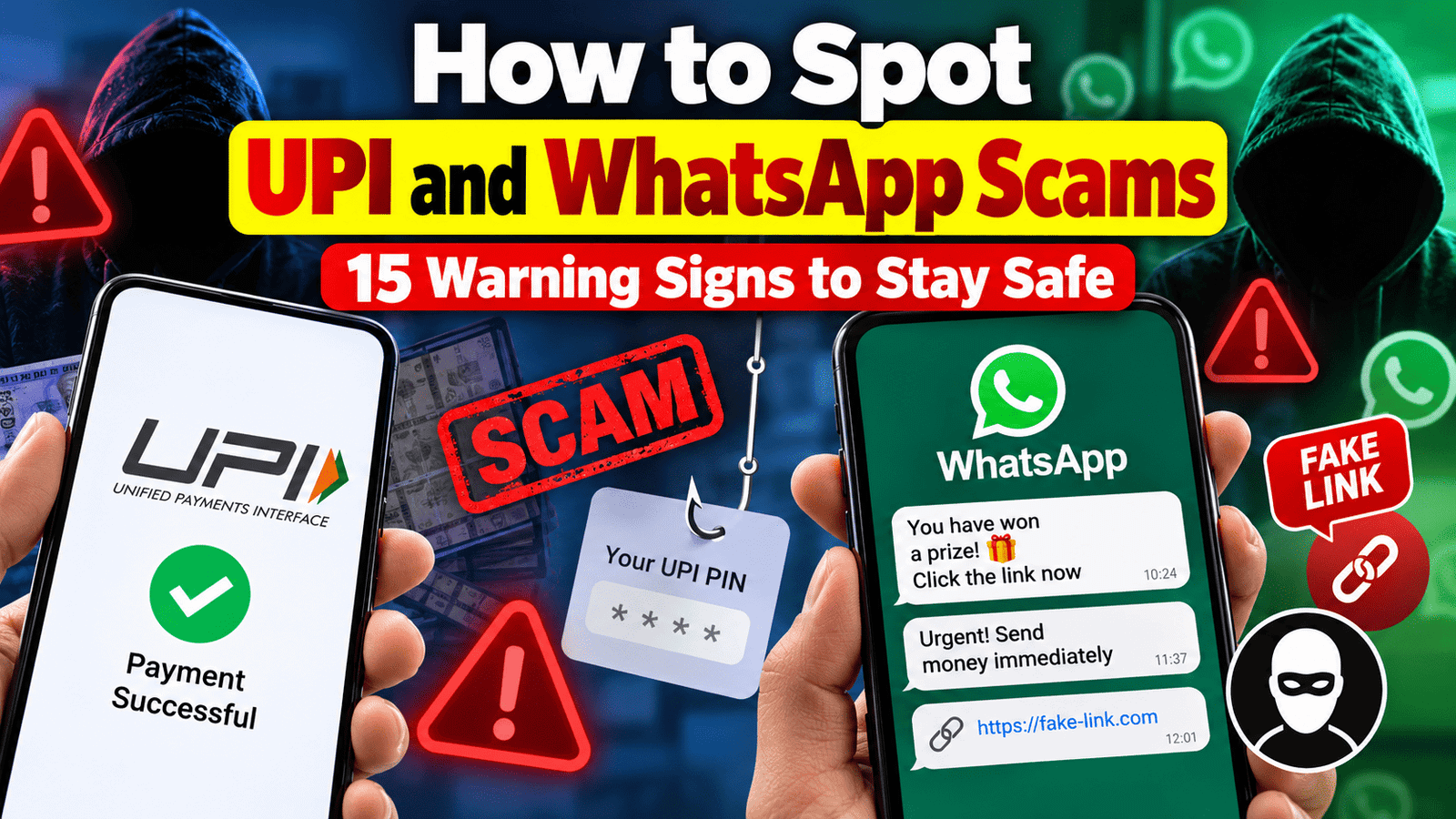
How to Spot UPI and WhatsApp Scams: 15 Warning Signs Everyone Should Know
Digital payments and messaging apps have made everyday life easier in India. You can send money through UPI, pay shopkeepers using QR codes, receive payments from customers, and communicate instantly through WhatsApp. However, scammers also use these platforms to trick people into sharing sensitive information or transferring money.
Knowing how to spot UPI and WhatsApp scams can help you protect your bank account, personal information, and digital identity. Fraudsters often pretend to be bank employees, customer support agents, relatives, online buyers, delivery agents, or investment experts. They may use fake payment screenshots, suspicious links, urgent messages, or convincing stories to gain your trust.
The good news is that many scams show recognizable warning signs. By understanding common fraud techniques and following a few simple safety practices, you can reduce your risk of becoming a victim.
In this guide, we will explain 15 common warning signs, share practical examples, and show you what to do if you receive a suspicious message or lose money to online fraud.
Understanding How to Spot UPI and WhatsApp Scams is essential for anyone who uses digital payments or messaging apps in India. Fraudsters often depend on trust, urgency, and confusion to convince people to share confidential information or transfer money. Learning the warning signs can help you make safer decisions online.
What Are UPI and WhatsApp Scams?
UPI scams involve fraudsters misusing India’s Unified Payments Interface to trick people into authorizing payments, revealing confidential information, or accessing their financial accounts.
WhatsApp scams use messages, calls, fake profiles, compromised accounts, and suspicious links to deceive users. Some scammers use WhatsApp to build trust before convincing victims to make UPI payments.
These scams can affect students, working professionals, business owners, senior citizens, and anyone who uses digital payments or messaging applications.
For example, a fraudster might pretend to be an online buyer and send a fake payment screenshot. Another might claim that your bank account will be blocked unless you immediately click a link. In both cases, the objective is to make you act before you verify the information.
Knowing How to Spot UPI and WhatsApp Scams begins with understanding how fraudsters operate. They may impersonate bank employees, online buyers, delivery agents, relatives, or customer support representatives. Their messages often appear genuine, but the real objective is to obtain money, payment authorization, or sensitive account information.
15 Warning Signs of UPI and WhatsApp Scams
1. A Message Asking You to Share Your UPI PIN or OTP
Your UPI PIN is confidential and should never be shared with another person. You should also never disclose an OTP, banking password, or other authentication code to someone who contacts you unexpectedly.
A genuine bank employee or customer support representative should not need your UPI PIN to process a routine payment.
Example: Someone calls and claims that your account needs verification. They ask you to read out the OTP received on your phone.
What to do: End the conversation and contact your bank through its official app, website, or verified customer service number.
2. Someone Asks You to Scan a QR Code to Receive Money
One important way to spot UPI scams is to understand how QR-code payments work.
Scanning a payment QR code and authorizing a transaction generally means you are preparing to pay the displayed recipient. You do not need to enter your UPI PIN simply to receive money into your account.
Example: An online buyer says they are sending you money and asks you to scan a QR code and enter your UPI PIN to receive the payment.
What to do: Do not follow those instructions. To confirm a payment, check your bank account or official UPI app transaction history.
One practical way to learn How to Spot UPI and WhatsApp Scams is to recognize suspicious QR-code requests. If someone claims that you must scan a code and enter your UPI PIN to receive money, stop and verify the request. Check incoming payments directly in your official payment application or bank account.
3. Fake Payment Screenshots
Fraudsters sometimes send edited screenshots showing that a payment has been completed. They may claim the money will appear in your account shortly or insist that you release goods immediately.
This technique can target shopkeepers, freelancers, small businesses, and people selling products online.
When learning How to Spot UPI and WhatsApp Scams, remember that a payment screenshot is not proof that money has reached your account. Fraudsters can edit images or show fabricated transaction details. Always verify the actual credit in your bank account before releasing products, providing services, or issuing a refund.
Warning signs include:
- A screenshot instead of a confirmed transaction.
- A claim that the payment is pending but the goods must be released immediately.
- A request to refund an amount that you never received.
What to do: Verify the actual credit in your bank account or official payment application before handing over goods or services.
4. Unexpected Cashback, Lottery, or Prize Messages
Messages promising free money, surprise prizes, or guaranteed rewards can be used to collect personal information or encourage fraudulent payments.
Scammers may claim that you have won a prize and must pay a processing fee, tax, or verification charge before receiving it.
Example: A WhatsApp message says you have won ₹50,000 and must pay ₹999 to claim your prize.
What to do: Do not pay a fee merely to claim an unexpected prize. Verify promotions independently through the company’s official website.
5. Suspicious Links Sent Through WhatsApp
Fraudulent links may lead to imitation banking websites, fake reward pages, or pages designed to collect passwords and personal information.
The message may claim that your account needs updating, your delivery is delayed, or your payment has failed.
Warning signs include:
- Misspelled website addresses.
- Unexpected shortened links.
- Messages creating panic or urgency.
- Requests to enter banking details after opening a link.
What to do: Avoid clicking suspicious links. If the message claims to come from a bank or company, open its official website or app independently.
Another important part of learning How to Spot UPI and WhatsApp Scams is identifying suspicious links. Unexpected messages about account suspension, prizes, delivery problems, or urgent verification may lead to fraudulent websites. Avoid entering passwords, banking information, or verification codes on pages reached through untrusted messages.
6. A Friend or Relative Suddenly Requests Money
A scammer may impersonate someone you know using a fake profile or a compromised WhatsApp account.
The message might say that the person has lost their wallet, needs urgent medical help, or is stranded somewhere.
Example: A message from a familiar-looking account asks you to transfer ₹5,000 immediately and promises repayment later.
What to do: Call the person on their known phone number or verify the request through another trusted channel before sending money. Even a message from a familiar account can be fraudulent if that account has been compromised.
7. Fake Customer Care Numbers
Fraudsters sometimes post fake customer support numbers on social media, discussion forums, or unofficial websites. They may pretend to represent a bank, UPI app, online marketplace, or delivery company.
They can then ask you to install an application, share an OTP, or authorize a transaction.
What to do: Find customer support details inside the official application or on the company’s verified website. Never trust an unknown number simply because it appears in a search result or comment.
An important part of How to Spot UPI and WhatsApp Scams is checking whether customer support information is genuine. Fraudsters may publish fake phone numbers and pretend to represent banks or payment services. Use the official app or verified company website to find support details rather than trusting numbers shared by unknown people.
8. Screen-Sharing or Remote-Access Requests
A person claiming to help resolve a payment problem may ask you to install a screen-sharing or remote-access application.
Depending on the permissions granted, this can expose sensitive information or allow a fraudster to observe your actions while you use banking applications.
What to do: Do not install remote-access software at the request of an unsolicited caller. Never reveal your PIN or OTP during a support call.
When researching How to Spot UPI and WhatsApp Scams, remember that unsolicited requests to install remote-access applications deserve special caution. Such tools may expose sensitive information if used improperly. Never install software simply because an unknown caller claims it is necessary to fix a payment problem.
9. Fake KYC or Bank Account Suspension Warnings
A message may claim that your bank account, debit card, or digital payment service will be blocked unless you complete KYC verification immediately.
The fraudster may provide a link to a fake verification page or ask you to disclose confidential details.
What to do: Verify account-related notices through your bank’s official app, website, or branch. Do not submit personal or financial information through an unverified link.
Knowing How to Spot UPI and WhatsApp Scams also means questioning messages that threaten to block your bank account unless you act immediately. Instead of clicking the supplied link, open your bank’s official application or contact the bank through a trusted channel to verify the warning.
10. WhatsApp Verification Code Scams
A fraudster may try to register your phone number on another device and then trick you into sharing the verification code sent to your phone.
If the attacker gains access to your account, they may impersonate you and ask your contacts for money.
What to do: Never share your WhatsApp registration code. Enable two-step verification and review your linked devices regularly. WhatsApp provides security tools to help protect accounts and block or report suspicious contacts.
11. Fake Online Shopping Buyers and Sellers
Online marketplaces and social groups can attract fraudsters posing as genuine buyers or sellers.
A fake buyer may send a payment screenshot or request a QR-code scan. A fake seller may demand advance payment and then disappear without delivering the product.
What to do: Verify incoming payments independently, research unfamiliar sellers, and be cautious about advance payments to unknown individuals.
12. Work-from-Home and Task Scams
Some scammers promise easy income for liking videos, reviewing products, completing online tasks, or following social media accounts.
Initially, they may show small earnings or even make a small payment to build trust. Later, they demand deposits to unlock higher-paying tasks or withdraw supposed earnings.
Warning sign: You must pay money to release money you have supposedly earned.
What to do: Do not deposit funds into an unfamiliar account to unlock earnings. Verify the employer and business independently, and be especially cautious of guaranteed returns for simple tasks.
Another useful lesson in How to Spot UPI and WhatsApp Scams is recognizing offers that require an upfront deposit before you can withdraw supposed earnings. Fraudulent task schemes may display fake profits to build trust. Verify the organization independently and avoid transferring money to unlock promised payments.
13. Investment and Cryptocurrency Promises
Fraudulent investment groups may operate through WhatsApp, promising guaranteed profits, exclusive trading signals, or unusually high returns.
They may share fabricated profit screenshots or testimonials to create confidence.
What to do: Verify the company and the relevant financial registration independently. Never make an investment solely because a WhatsApp group recommends it, and do not trust guaranteed-profit claims.
14. Impersonation of Police, Government Officials, or Bank Staff
Fraudsters may pretend to be officials and threaten arrest, account suspension, or legal action unless you transfer money immediately.
They may use official-looking photographs, documents, caller identification, or video calls to make the story appear convincing.
What to do: Do not transfer money under pressure. End the call and independently contact the relevant institution through its official contact details. Treat demands for immediate payment to avoid supposed legal trouble as a serious warning sign.
15. Urgent Messages That Prevent You From Thinking
A common feature of scams is pressure. The sender may insist that you act within minutes, keep the conversation secret, or avoid speaking to your bank or family.
This urgency is designed to stop you from checking the facts.
What to do: Pause before acting. Verify the person’s identity, payment details, and claims independently. A legitimate request should withstand reasonable verification.
Learning How to Spot UPI and WhatsApp Scams can help you recognize suspicious behaviour before it leads to financial loss. Always pay attention to unexpected payment requests, unusual links, and messages that demand immediate action. Taking a moment to verify the details can prevent mistakes that are difficult to reverse.
UPI Scams vs WhatsApp Scams: What’s the Difference?
| Feature | UPI Scam | WhatsApp Scam |
|---|---|---|
| Main target | Payments and financial transactions | Trust, accounts, and personal information |
| Common method | Fake payment requests, QR-code tricks, fraudulent collect requests | Impersonation, phishing links, fake offers |
| Typical warning | Being asked to enter a PIN to receive money | Urgent messages or requests for verification codes |
| Best protection | Verify the transaction and recipient before authorizing payment | Verify the sender and avoid suspicious links |
| What to do | Contact your bank and report suspected fraud | Block and report suspicious accounts |
Some scams combine both methods. For example, a fraudster might contact you through WhatsApp and then convince you to authorize a UPI payment.
How to Protect Yourself from UPI and WhatsApp Scams
Keep Your UPI PIN and OTP Private
Never disclose your UPI PIN, passwords, or authentication codes to someone who contacts you. Enter your PIN only within the trusted payment flow when you intend to authorize a transaction.
Verify Every Payment
Check the actual transaction status in your official UPI app or bank account. Never rely only on screenshots, SMS messages forwarded by another person, or verbal claims.
Enable WhatsApp Two-Step Verification
Open WhatsApp and look for Settings → Account → Two-step verification. Follow the instructions available in your version of the app. If passkeys are supported on your device, consider setting one up as an additional account-protection measure.
Review Linked Devices
Open WhatsApp’s Linked Devices section and inspect the devices connected to your account. Log out any device you do not recognize.
Use Official Applications
Install banking and payment apps from trusted official app stores. Avoid unofficial WhatsApp versions and applications suggested by unknown callers.
Limit Personal Information
Avoid sharing unnecessary financial information, identity documents, or sensitive details in public groups and with unverified contacts.
Educate Family Members
Discuss common scam methods with children, parents, and older relatives. Encourage everyone to verify urgent money requests before sending funds.
A practical way to apply How to Spot UPI and WhatsApp Scams is to establish a verification habit before every unfamiliar transaction. Check the recipient’s details, confirm the reason for payment, and never authorize a transaction you do not understand. These simple checks are especially useful when a stranger creates pressure to act quickly.
What to Do If You Become a Victim of a UPI or WhatsApp Scam
If you suspect that money has been stolen, act quickly. Reporting promptly may help the authorities and financial institutions take appropriate action, although recovery is not guaranteed.
Step 1: Contact the cybercrime helpline.
In India, call 1930 as soon as possible to report suspected cyber financial fraud.
Step 2: File an online complaint.
Visit the official National Cyber Crime Reporting Portal at https://cybercrime.gov.in/ and follow the instructions for reporting the incident.
Step 3: Contact your bank or payment provider.
Use an official contact channel to report the transaction. Ask what steps are available to secure your account and raise a dispute.
Step 4: Preserve evidence.
Keep transaction IDs, bank messages, screenshots, suspicious phone numbers, chat records, and relevant URLs. Do not delete important evidence.
Step 5: Secure your accounts.
If your WhatsApp account is compromised, follow the official account-recovery process, review linked devices, and strengthen your security settings. If you shared banking credentials, contact your bank immediately and follow its instructions to secure them.
Step 6: Report the suspicious account.
Use WhatsApp’s in-app reporting and blocking options for suspicious messages or accounts. You can also report suspected cybercrime through the official government portal.
Knowing How to Spot UPI and WhatsApp Scams is useful, but knowing how to respond is equally important. If you suspect financial fraud in India, contact your bank immediately, call the cyber financial fraud helpline at 1930, and report the incident through the official National Cyber Crime Reporting Portal. Preserve transaction IDs, messages, and screenshots as evidence.
Frequently Asked Questions
1. How can I identify a UPI scam?
Look for requests to reveal your PIN or OTP, scan a QR code to receive money, authorize an unexpected payment, or act under pressure. Always verify the transaction in your official payment app or bank account.
2. Can someone steal money using only my UPI ID?
A UPI ID alone is generally not sufficient to authorize a payment from your account. However, scammers can use your UPI ID in social-engineering attempts, fake collect requests, or other fraudulent schemes. Never approve an unexpected transaction or share confidential credentials.
3. Is it safe to receive money through WhatsApp?
Receiving a message or payment notification through WhatsApp is not proof that money has reached your account. Verify the credit through your bank or trusted UPI app, and never disclose your PIN to receive funds.
4. What should I do if I accidentally clicked a suspicious link?
Do not enter any information or install anything suggested by the page. If you entered banking details, shared an OTP, or authorized a payment, contact your bank immediately. If you installed an unfamiliar application, disconnect it from sensitive activities and seek trusted technical help to remove it and secure your accounts.
5. Can I recover money lost in a UPI scam?
Recovery depends on the circumstances, the transaction, and action taken by the relevant bank or authorities. Contact your bank and call 1930 promptly, then file a complaint through the official cybercrime portal. Reporting does not guarantee recovery, but acting quickly is important.
6. What is the official cybercrime helpline number in India?
The national helpline for reporting cyber financial fraud is 1930. You can also file a complaint at https://cybercrime.gov.in/.
7. Should I share my WhatsApp verification code with customer support?
No. Do not share your WhatsApp registration code with another person. Use the official app’s account-security and recovery features if you need assistance.
The best way to apply what you learn about How to Spot UPI and WhatsApp Scams is to pause whenever a message creates pressure or requests money or confidential information. Verify every payment independently, avoid suspicious links, and never share your PIN or OTP. A few careful checks can help protect your finances and personal information.
Conclusion
Learning how to spot UPI and WhatsApp scams is an essential part of using digital services safely. Fake payment screenshots, suspicious links, impersonation, unexpected QR-code requests, and pressure to reveal confidential information are all warning signs to take seriously.
Remember three simple rules: pause before acting, verify before paying, and never share your PIN or OTP. Check payments independently, protect your WhatsApp account, and discuss online safety with your family.
If you suspect fraud, contact your bank and report it promptly through India’s cybercrime helpline at 1930 or the official cybercrime portal. A few careful checks can help prevent a costly mistake.
📖 Next Blog: Continue Reading on My Daily Viral
Want to keep exploring the latest trending topics, guides, and updates? Check out our other popular blogs below 👇
🎬 Entertainment & Movies
-
🇮🇳 Battle of Galwan Movie 2026: Salman Khan’s Powerful War Drama Based on Real Events
📱 Technology & Gadgets
-
📱 Amazing iPhone 17 Series (2025) – Full Review, Top Features & Price in India
-
☁️ What is Cloud Computing? Beginner’s Guide (AWS, Azure, GCP Explained
👗 Fashion & Festivals
-
💃 Navratri Lehengas Chaniya Cholis 2025 – Stunning Trends, Colors & Styling Ideas
-
🎉 Explore 2025 Festival & Wedding Fashion in India – For Men, Women & Kids
-
🪔 Navratri 2025: 9 Days of Goddess, History, Rituals, Fashion & Fasting
🧘 Health & Lifestyle
-
🧘♀️ How to Include Yoga in Your Daily Routine | 10 Simple Ways for a Healthy Life
-
🌿 Yoga for Back Pain: Ultimate Guide to Relief, Flexibility & Strength
-
💪 Daily Home & Office Workout Routine Without Equipment – Stay Fit Anywhere
-
🥗 Ultimate Guide to Weight Loss in 2025-26: Diet, Workouts & Lifestyle Tips
-
🍛 7-Day Indian Weight Loss Diet Plan (Veg & Non-Veg) – 2025-26 Edition