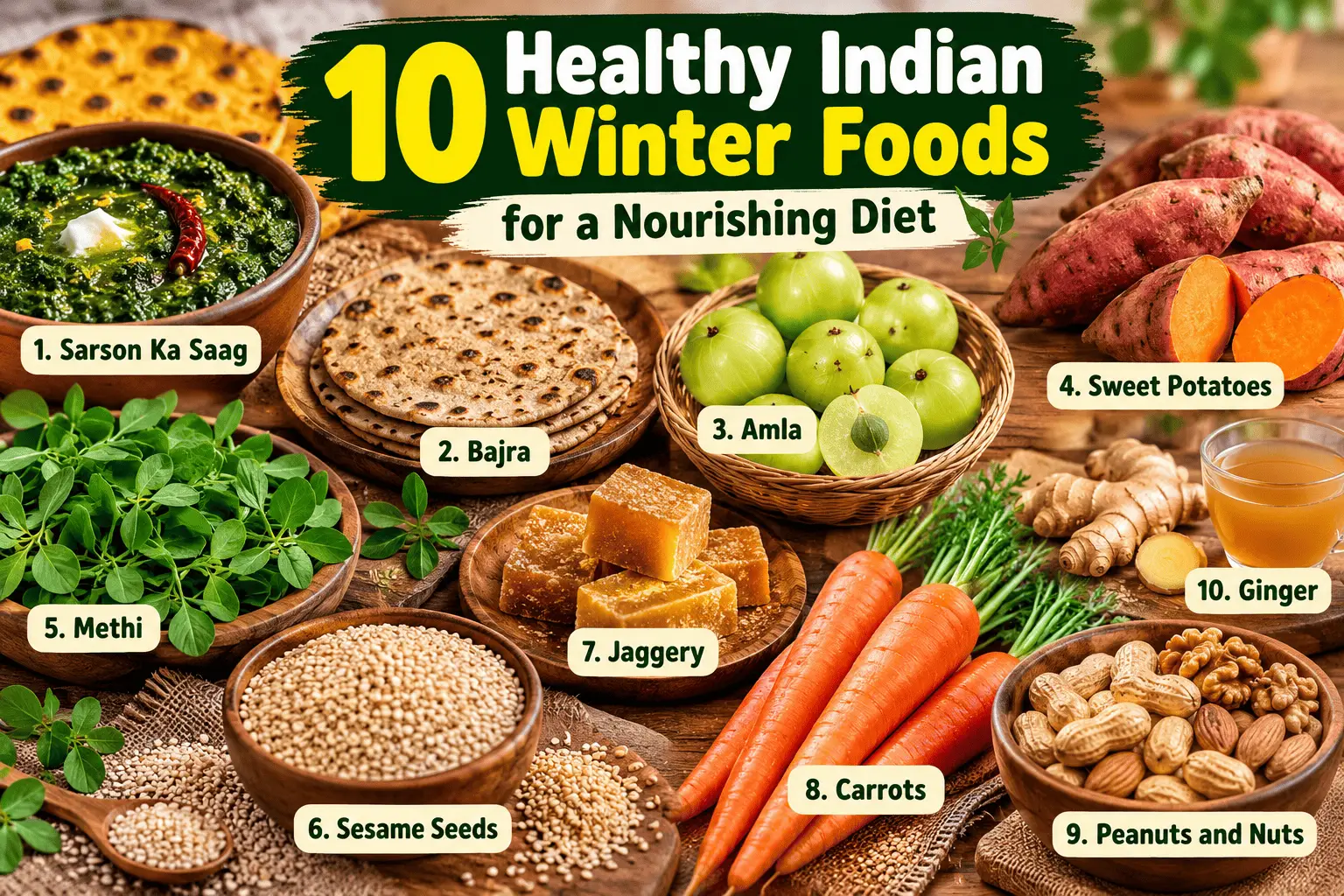
Healthy Indian Winter Foods: 10 Nutritious Choices
Winter is the perfect time to enjoy fresh seasonal vegetables, warming spices, nutritious grains, and traditional Indian dishes. As temperatures drop, many people look for foods that provide energy, support everyday nutrition, and make meals more satisfying.
The good news is that Indian cuisine offers plenty of delicious options for the colder months. From sarson ka saag and makki ki roti to bajra khichdi, amla, sesame seeds, and homemade soups, winter foods can add variety and valuable nutrients to your daily diet.
Choosing healthy Indian winter foods is not about following a complicated diet. It is about eating a balanced variety of seasonal produce, whole grains, pulses, nuts, seeds, and other nourishing ingredients.
In this guide, discover 10 healthy Indian winter foods, their nutritional benefits, and simple ways to include them in your everyday meals.
Choosing healthy Indian winter foods is an easy way to add seasonal variety to your daily meals. From fresh green vegetables and traditional millets to vitamin-rich fruits and nuts, Indian winter ingredients offer different nutrients that support a balanced diet.
Why Should You Eat Seasonal Foods in Winter?
Seasonal foods can make winter meals more enjoyable and nutritious. Indian winter markets often offer leafy greens, root vegetables, citrus fruits, guava, amla, peas, and other fresh produce.
These foods supply nutrients such as vitamins, minerals, fibre, and antioxidants. Whole grains, pulses, nuts, and seeds also provide energy, protein, and healthy fats as part of a balanced diet.
One of the best things about healthy Indian winter foods is the variety available during the colder months. Seasonal carrots, leafy greens, amla, methi, and sweet potatoes can make everyday meals more colourful, flavourful, and nutritious.
However, no single food can guarantee immunity or prevent illness. Your overall eating pattern, sleep, physical activity, and other lifestyle habits all contribute to general health.
One of the best things about healthy Indian winter foods is their variety. Seasonal vegetables, fresh fruits, whole grains, nuts, and seeds can be combined to prepare nourishing meals that suit different tastes and regional food traditions across India.
1. Sarson Ka Saag: A Traditional Winter Favourite
Sarson ka saag is a popular North Indian dish prepared with mustard greens, often combined with spinach, bathua, or other leafy greens. It is traditionally served with makki ki roti during winter.
Mustard greens provide fibre, folate, vitamin K, and other nutrients. The exact nutritional value depends on the ingredients and cooking method.
Health benefits of sarson ka saag
- Provides vitamins and minerals from leafy greens.
- Contributes dietary fibre to meals.
- Adds variety to a balanced winter diet.
- Offers a satisfying way to enjoy seasonal vegetables.
How to eat it
Prepare sarson ka saag with mustard greens, ginger, garlic, and moderate amounts of oil or ghee. Serve it with makki ki roti and a side of fresh vegetables or curd if suitable for your diet.
For a lighter meal, use less added fat while retaining the flavour of traditional spices.
2. Bajra: A Nutritious Winter Grain
Bajra, also known as pearl millet, is widely used in Indian cooking. Bajra roti, khichdi, and porridge are common ways to enjoy this whole grain, especially in parts of Gujarat and Rajasthan.
Bajra contains complex carbohydrates, fibre, protein, and minerals such as magnesium and iron. Its nutritional profile makes it a useful addition to a varied diet.
Why bajra is a good winter food
- Supplies energy from complex carbohydrates.
- Contributes fibre to everyday meals.
- Provides plant-based protein and minerals.
- Offers an alternative to refined-grain foods.
How to include bajra in your diet
Enjoy bajra roti with seasonal vegetables, dal, or curd. You can also prepare bajra khichdi with moong dal and vegetables for a filling lunch.
If you are new to millet-based foods, introduce them gradually and drink enough water throughout the day.
3. Amla: A Vitamin C-Rich Indian Fruit
Amla, or Indian gooseberry, is a traditional Indian fruit known for its sour taste and vitamin C content. It can be eaten fresh or used in chutneys, salads, and other preparations.
Vitamin C supports normal immune function and helps the body absorb non-haem iron from plant foods. Amla is one way to add this vitamin to your diet.
Benefits of eating amla
- Provides vitamin C.
- Contributes antioxidants and other plant compounds.
- Adds a refreshing, tangy flavour to meals.
- Can complement a varied fruit and vegetable intake.
Easy ways to eat amla
Try a small serving of fresh amla, add chopped pieces to a salad, or prepare an amla chutney. If you prefer a less sour taste, combine it with other fruits in a balanced snack.
Amla supplements and concentrated preparations are not necessary for everyone. People with specific medical conditions or dietary restrictions should seek personalised advice where needed.
4. Sweet Potatoes: A Comforting Seasonal Vegetable
Sweet potatoes are naturally sweet root vegetables that can be roasted, boiled, steamed, or added to curries. Their soft texture makes them a popular choice for comforting winter meals.
Orange-fleshed sweet potatoes are a source of beta-carotene, which the body can convert into vitamin A. They also provide carbohydrates, fibre, and potassium.
Why sweet potatoes are nutritious
- Supply energy for daily activities.
- Provide fibre that supports digestive health.
- Orange varieties contain beta-carotene.
- Work well in both sweet and savoury dishes.
How to enjoy sweet potatoes
Roast or steam sweet potatoes and season them with lemon juice and spices. You can also add cubes to vegetable curry, prepare a simple chaat, or combine them with chickpeas for a filling snack.
Choose cooking methods that do not require excessive oil or added sugar.
5. Methi: Fresh Fenugreek Leaves
Fresh methi is widely available during the Indian winter and is used in dishes such as methi thepla, aloo methi, methi paratha, and mixed vegetable preparations.
Fenugreek leaves contribute fibre and several micronutrients. Their distinctive flavour also makes it easier to add more leafy greens to everyday meals.
Benefits of fresh methi
- Adds leafy vegetables to your diet.
- Contributes fibre and micronutrients.
- Brings flavour to simple home-cooked meals.
- Pairs well with whole grains, pulses, and other vegetables.
Healthy ways to eat methi
Prepare aloo methi with a moderate amount of oil, add chopped leaves to dal, or make methi thepla using a suitable whole-wheat flour recipe.
If you are watching your salt intake, prepare homemade thepla with moderate salt and pair it with fresh curd or a vegetable dish.
Many healthy Indian winter foods are closely connected with traditional regional recipes. Sarson ka saag with makki ki roti, bajra roti with vegetables, and freshly prepared methi dishes are popular examples. Enjoy these meals in balanced portions alongside other nutritious foods to maintain variety in your diet.
6. Sesame Seeds: Small Seeds with Useful Nutrients
Sesame seeds, called til in Hindi and Gujarati, are commonly used in Indian winter recipes. Til ladoo, chikki, chutneys, and sesame-based preparations are popular in several regions.
Sesame seeds contain unsaturated fats, protein, fibre, and minerals such as calcium and iron. They are energy-dense, so small portions can add flavour and nutrition to meals.
Why sesame seeds are popular in winter
- Provide energy and healthy unsaturated fats.
- Contribute minerals and plant-based protein.
- Add crunch and flavour to snacks.
- Work well in traditional festive recipes.
How to include sesame seeds
Sprinkle roasted sesame seeds over vegetables or salads, add them to chutneys, or enjoy a small portion of til chikki.
Traditional sesame sweets can contain significant amounts of sugar and jaggery. Enjoy them in moderation as part of your overall diet.
7. Jaggery: A Traditional Sweetener
Jaggery, known as gur, is used in Indian winter recipes such as chikki, til ladoo, and certain regional sweets.
Although jaggery may contain small amounts of minerals, it is still a concentrated source of sugar. It should not be considered a health food that can replace a balanced diet or a reliable treatment for low iron.
How to enjoy jaggery sensibly
- Use small amounts in homemade recipes.
- Combine traditional sweets with a balanced eating pattern.
- Avoid assuming jaggery is suitable without limits simply because it is less refined than white sugar.
- Consider your overall sugar intake, especially if you have diabetes or need to manage blood glucose.
Jaggery can be enjoyed for its traditional flavour, but moderation remains important.
8. Gajar: Fresh Carrots for Winter Meals
Carrots are popular during the Indian winter and can be used in salads, soups, vegetable dishes, and traditional desserts such as gajar ka halwa.
Carrots contain beta-carotene, which the body converts into vitamin A. Vitamin A supports normal vision and immune function.
Benefits of carrots
- Provide beta-carotene.
- Contribute fibre to meals.
- Add colour, texture, and natural sweetness.
- Can be enjoyed raw or cooked.
Healthy ways to eat carrots
Add grated carrots to salads, prepare carrot soup, or cook them with peas and other vegetables. For a lighter version of gajar ka halwa, consider reducing the added sugar and ghee while retaining the traditional ingredients you enjoy.
Eating carrots with a meal containing some fat can help the body absorb fat-soluble carotenoids.
9. Peanuts and Nuts: Convenient Winter Snacks
Peanuts, almonds, walnuts, and other nuts are convenient additions to a winter diet. Peanuts are technically legumes, while almonds and walnuts are tree nuts, but all can contribute useful nutrients.
They provide varying amounts of protein, unsaturated fats, fibre, and minerals. Nuts and peanuts can also make snacks more filling.
Benefits of nuts and peanuts
- Provide energy and unsaturated fats.
- Contribute protein and minerals.
- Offer a convenient snack option.
- Add flavour and texture to breakfast and meals.
How to eat them
Enjoy a small handful of unsalted nuts or roasted peanuts as a snack. You can also add chopped nuts to porridge, sprinkle them over salads, or combine them with fruit.
Avoid excessive portions because nuts and peanuts are calorie-dense. People with nut or peanut allergies should avoid the relevant foods.
10. Ginger: A Flavourful Winter Ingredient
Ginger is widely used in Indian cooking, from masala chai and soups to dal, vegetable curries, and ginger-based chutneys.
It adds a warm, spicy flavour and contains naturally occurring compounds such as gingerols. Ginger can be part of a balanced diet, although drinking ginger tea does not guarantee protection against colds or other winter illnesses.
Ways ginger can complement winter meals
- Adds flavour to soups and broths.
- Enhances dal and vegetable curries.
- Works well in warm drinks.
- Pairs with lemon and other spices.
How to use ginger
Add freshly grated ginger to vegetable soup, cook it with dal, or prepare ginger tea according to your preference. If you enjoy sweetened tea, keep the added sugar moderate.
People taking certain medicines or managing specific health conditions should ask a healthcare professional about concentrated ginger supplements rather than assuming they are risk-free.
A Simple Indian Winter Diet Plan
You do not need to eat all 10 foods every day. Instead, rotate seasonal produce, whole grains, pulses, nuts, and other foods throughout the week.
| Meal | Example |
|---|---|
| Breakfast | Bajra roti with vegetables, or methi thepla with curd |
| Mid-morning | Amla, guava, orange, or another seasonal fruit |
| Lunch | Dal, roti, seasonal vegetables, and salad |
| Evening snack | Roasted peanuts or a small portion of nuts |
| Dinner | Vegetable khichdi, soup with whole-grain roti, or seasonal curry |
| Occasional treat | A small portion of til chikki or another traditional sweet |
This is a general example, not a personalised medical diet. Adjust portions and food choices according to your appetite, activity level, allergies, preferences, and health needs.
You can include healthy Indian winter foods throughout the day instead of eating them all in one meal. Try bajra roti with vegetables at lunch, seasonal fruit as a snack, and a warm vegetable soup or dal with whole-grain roti for dinner.
You do not need an expensive meal plan to enjoy healthy Indian winter foods. Choose seasonal produce available in your local market, prepare simple home-cooked meals, and include a suitable mix of vegetables, whole grains, protein sources, and fruit throughout the day.
Tips for Healthy Eating During Winter
1. Choose a Variety of Seasonal Produce
Include leafy greens, root vegetables, citrus fruits, and other seasonal produce. Different foods provide different nutrients, so variety is more useful than relying on one so-called superfood.
2. Include Protein in Your Meals
Dal, beans, chickpeas, dairy products, eggs, tofu, and other protein sources can complement winter vegetables and whole grains.
3. Prefer Whole Grains Regularly
Bajra, whole wheat, oats, and other whole grains can help add fibre and variety to your meals. Choose options that suit your digestion and preferences.
4. Stay Hydrated
People sometimes drink less water in cold weather because they feel less thirsty. Continue drinking water regularly, and include soups or other suitable fluids if you enjoy them.
5. Be Mindful of Festive Sweets
Winter brings many traditional foods made with jaggery, sugar, ghee, and nuts. You can enjoy them while keeping portions sensible and balancing them with everyday nutritious meals.
6. Combine Good Food with Healthy Habits
Balanced meals work best alongside adequate sleep, regular physical activity, and appropriate healthcare. No particular winter food can guarantee immunity or prevent every seasonal illness.
For a balanced winter diet, combine healthy Indian winter foods with protein-rich ingredients such as dal, beans, chickpeas, curd, or other foods that suit your diet. This approach provides variety rather than relying on a single ingredient for nutrition.
When planning your weekly menu, choose healthy Indian winter foods that are locally available and fit your budget. Rotate different vegetables, fruits, grains, and nuts so your meals remain interesting and provide a wider range of nutrients.
Frequently Asked Questions
1. Which Indian foods are best to eat in winter?
Seasonal leafy greens, bajra, sweet potatoes, carrots, amla, methi, sesame seeds, nuts, and ginger can all contribute to a varied winter diet. The best choices depend on your nutritional needs, preferences, and local availability.
2. Which Indian winter foods contain vitamin C?
Amla is a particularly rich source of vitamin C. Other options include citrus fruits and guava. Vitamin C content varies with freshness, storage, and preparation.
3. Is bajra good for a winter diet?
Bajra provides complex carbohydrates, fibre, protein, and minerals. It can be included in a balanced diet as roti, khichdi, or porridge, alongside vegetables and protein-rich foods.
4. Can I eat jaggery every day in winter?
Jaggery can be enjoyed in small amounts, but it remains a source of sugar. People who need to manage blood glucose or limit sugar intake should pay attention to portion sizes and follow their healthcare professional’s advice.
5. Which winter foods are good for vegetarians?
Vegetarian options include dal, chickpeas, beans, bajra, leafy greens, sweet potatoes, sesame seeds, peanuts, nuts, and dairy products if consumed. Combining different plant foods helps provide a range of nutrients.
6. Are traditional winter foods enough to prevent colds?
No single food can guarantee prevention of colds or other infections. A varied diet supports general health, while hygiene, sleep, appropriate vaccination, and other preventive measures also matter.
7. What is a healthy Indian winter breakfast?
Options include methi thepla with curd, vegetable poha, bajra porridge, oats with nuts, or whole-grain roti with vegetables and a protein source. Choose a meal that fits your needs and keeps you comfortably satisfied.
The simplest way to enjoy healthy Indian winter foods is to make seasonal ingredients part of your regular cooking routine. Small changes, such as adding leafy greens to dal or choosing bajra instead of refined grains occasionally, can help create a more varied eating pattern.
Ultimately, healthy Indian winter foods can make seasonal eating both nutritious and enjoyable. From traditional sarson ka saag and bajra roti to amla, carrots, peanuts, and sesame seeds, a varied diet helps you enjoy winter ingredients without relying on a single food for all your nutritional needs.
Making healthy Indian winter foods part of your routine does not require complicated recipes. Start with familiar seasonal ingredients, prepare balanced home-cooked meals, and combine different food groups to support a varied and enjoyable winter diet.
Conclusion
Indian winter cuisine offers a wide range of seasonal ingredients that can make everyday meals both delicious and nutritious. From sarson ka saag and bajra to amla, sweet potatoes, methi, sesame seeds, carrots, nuts, and ginger, these foods bring different nutrients and flavours to your plate.
The key to enjoying healthy Indian winter foods is variety, sensible portions, and balanced meals. Combine seasonal vegetables with whole grains and protein-rich foods, stay hydrated, and enjoy traditional sweets in moderation.
Rather than relying on a single ingredient for health benefits, build an eating pattern that suits your lifestyle and preferences. With simple seasonal choices, you can make winter meals comforting, colourful, and nourishing.
📖 Next Blog: Continue Reading on My Daily Viral
Want to keep exploring the latest trending topics, guides, and updates? Check out our other popular blogs below 👇
🎬 Entertainment & Movies
-
🇮🇳 Battle of Galwan Movie 2026: Salman Khan’s Powerful War Drama Based on Real Events
📱 Technology & Gadgets
-
📱 Amazing iPhone 17 Series (2025) – Full Review, Top Features & Price in India
-
☁️ What is Cloud Computing? Beginner’s Guide (AWS, Azure, GCP Explained)
👗 Fashion & Festivals
-
💃 Navratri Lehengas Chaniya Cholis 2025 – Stunning Trends, Colors & Styling Ideas
-
🎉 Explore 2025 Festival & Wedding Fashion in India – For Men, Women & Kids
-
🪔 Navratri 2025: 9 Days of Goddess, History, Rituals, Fashion & Fasting
🧘 Health & Lifestyle
-
🧘♀️ How to Include Yoga in Your Daily Routine | 10 Simple Ways for a Healthy Life
-
🌿 Yoga for Back Pain: Ultimate Guide to Relief, Flexibility & Strength
-
💪 Daily Home & Office Workout Routine Without Equipment – Stay Fit Anywhere
-
🥗 Ultimate Guide to Weight Loss in 2025-26: Diet, Workouts & Lifestyle Tips
-
🍛 7-Day Indian Weight Loss Diet Plan (Veg & Non-Veg) – 2025-26 Edition