7 Amazing Gujarati Folk Dances: Garba, Dandiya & More
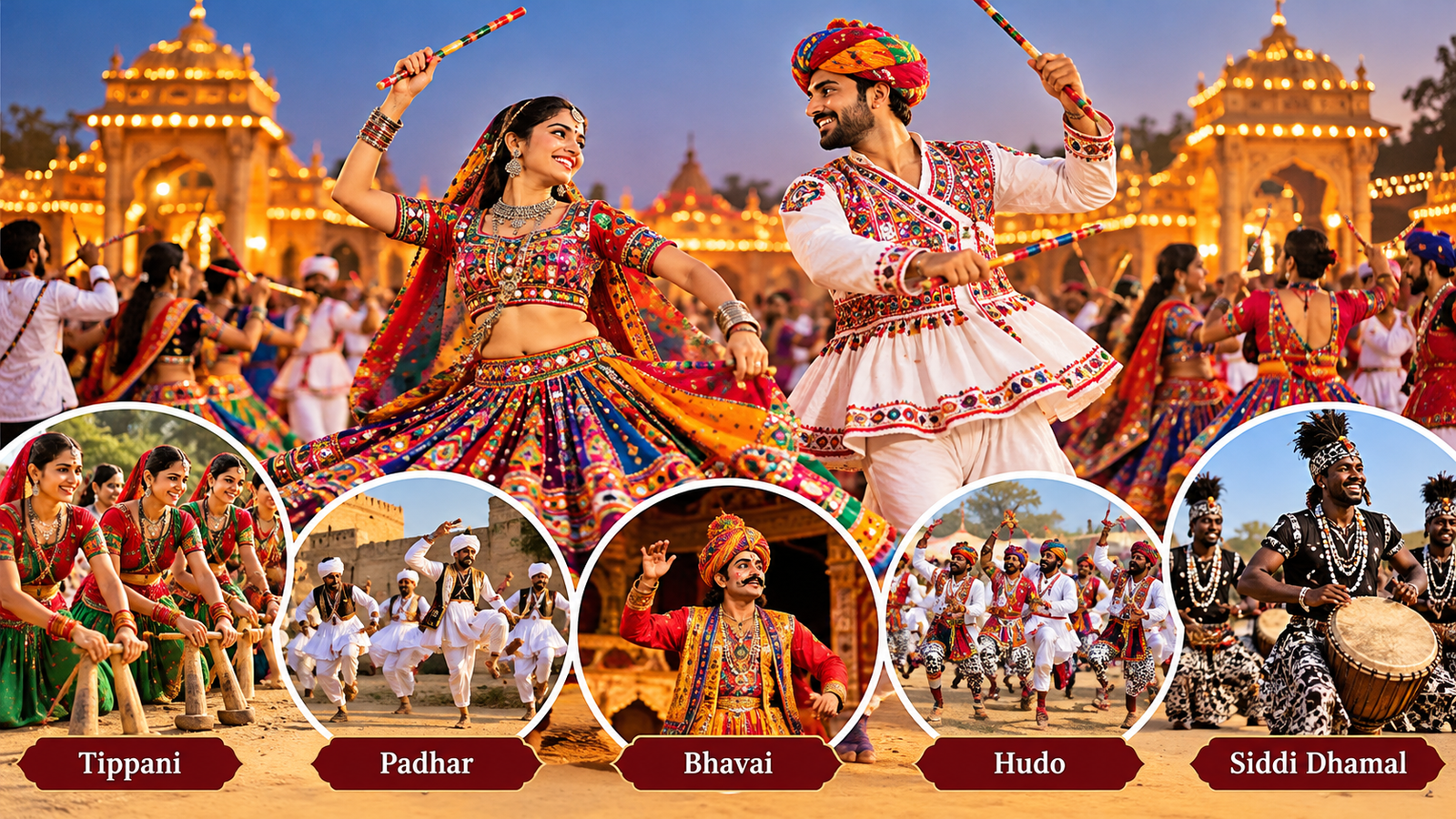
Gujarati folk dances are an important part of Gujarat’s cultural heritage, bringing people together through music, colourful traditional clothing, rhythmic movements, and festive celebrations. From the energetic circles of Garba to the rhythmic stick movements of Dandiya Raas, these traditional dances reflect the joy, devotion, and community spirit of Gujarat.
Many Gujarati folk dances are performed during Navratri, weddings, religious celebrations, and local festivals. Some tell stories of devotion, while others celebrate harvests, bravery, and everyday life.
In this guide, discover 7 amazing Gujarati folk dances, their cultural significance, distinctive features, and the occasions when you can experience them.
These Gujarati Folk Dances represent the diverse traditions of different communities across the state. Each performance has its own style, rhythm, and cultural significance, making Gujarat a fascinating destination for anyone interested in traditional Indian dance and heritage.
1. Garba: Gujarat’s Most Famous Folk Dance
Garba is one of the most popular traditional dances of Gujarat and is especially associated with the nine nights of Navratri. People gather in circles and dance to devotional songs dedicated to Goddess Durga and other forms of the Divine Feminine.
Traditional Garba movements include graceful clapping, coordinated steps, turns, and rhythmic footwork. The dance often takes place around a decorated earthen pot called a garbo or an illuminated arrangement representing divine energy.
Key Features of Garba
- Traditional clothing: Women often wear colourful chaniya cholis, while men may wear kediyu outfits with traditional trousers.
- Music: Devotional songs, folk melodies, and energetic percussion create the rhythm.
- Occasions: Navratri, community festivals, cultural programmes, and celebrations.
- Cultural significance: Garba expresses devotion, togetherness, and the celebration of feminine divine energy.
Modern Garba events may feature professional singers, elaborate lighting, and large dance grounds. However, the central attraction remains the shared experience of dancing together.
Why it is special: Garba brings generations together, allowing people to celebrate Gujarati traditions while enjoying music, movement, and community spirit.
Garba is celebrated in different styles across Gujarat, with variations in steps, music, and performance traditions. Some groups prefer slow, graceful movements, while others enjoy faster rhythms and complex footwork as the music becomes more energetic. Traditional Garba songs often express devotion and celebrate the divine feminine, while contemporary performances may include modern musical arrangements. Community Garba events provide an opportunity for beginners and experienced dancers to participate together. Although the choreography may change from place to place, the spirit of devotion, unity, and celebration remains central to this beloved Gujarati folk dance.
Among the most celebrated Gujarati Folk Dances, Garba stands out for its devotional songs, graceful circular movements, and colourful traditional costumes. Its popularity continues to grow as people of different ages participate in Navratri celebrations across Gujarat and beyond.
2. Dandiya Raas: The Energetic Stick Dance
Dandiya Raas is another iconic Gujarati folk dance, widely performed during Navratri. Dancers use pairs of decorated wooden sticks, known as dandiyas, to create rhythmic patterns while moving in coordinated circles or lines.
Participants strike their sticks in time with the music, following repeating steps and changing partners or positions as the dance progresses.
Key Features of Dandiya Raas
- Traditional accessories: Pairs of colourful wooden sticks.
- Clothing: Traditional Gujarati outfits, including chaniya cholis, kediyus, and embroidered garments.
- Music: Rhythmic folk songs accompanied by percussion and other instruments.
- Occasions: Navratri celebrations, cultural festivals, and community events.
Dandiya Raas requires timing, coordination, and awareness of other dancers. Beginners can start with simple patterns before learning more complicated sequences.
Why it is special: The combination of music, movement, and rhythmic stickwork makes Dandiya Raas an exciting way to experience Gujarat’s festive culture.
Dandiya Raas is an important part of Gujarat’s festive identity and is especially popular during Navratri. The colourful sticks, coordinated movements, and lively music make it an engaging group activity. Participants often form circles or rows, following rhythmic patterns while moving in time with the music. In some traditional interpretations, the dance is associated with the stories and symbolism of Lord Krishna’s Raas Leela. Today, Dandiya Raas is performed at community gatherings, cultural festivals, and celebrations across India and abroad. Its continuing popularity shows how traditional Gujarati dance can connect people across generations.
Dandiya Raas is one of the most energetic Gujarati Folk Dances, bringing together music, coordination, and festive excitement. Learning its basic steps is a wonderful way for beginners to participate in Navratri and experience an important part of Gujarat’s cultural identity.
3. Tippani Dance: A Celebration of Teamwork
Tippani is a traditional folk dance associated particularly with the Saurashtra region of Gujarat. It is historically connected with women working together during labour-intensive activities, including compacting floors in traditional houses.
The dance takes its name from the tippani, a long wooden tool used in this work. Dancers perform coordinated movements while striking the ground with the tools in rhythm.
Key Features of Tippani Dance
- Traditional props: Long wooden tools used to create rhythmic beats.
- Performance style: Group movements, coordinated steps, and strong rhythmic patterns.
- Cultural roots: Community life and traditional working practices in Saurashtra.
- Occasions: Folk performances, cultural festivals, and heritage events.
Tippani demonstrates how ordinary tools and shared work could inspire distinctive artistic traditions. Its powerful rhythms and coordinated movements distinguish it from the circular patterns of Garba.
Tippani dance offers an interesting example of how traditional work practices can influence folk art. Associated with the Saurashtra region, the dance uses coordinated movements and rhythmic sounds created with long wooden tools. The performers work together to maintain the beat, creating a powerful group presentation. Traditional costumes and folk music add to its visual appeal during cultural programmes. Tippani also highlights the importance of community cooperation in rural life. By presenting this dance at festivals and heritage events, performers help introduce younger audiences to a distinctive part of Gujarat’s regional culture.
4. Padhar Dance: The Folk Tradition of Gujarat’s Padhar Community
Padhar dance is associated with the Padhar community, traditionally found around parts of Gujarat, including areas near Nal Sarovar. It is known for expressive group movements and performances inspired by community life and the surrounding environment.
Like many regional folk traditions, Padhar dance reflects the cultural identity of the people who preserve it. Performances may feature rhythmic footwork, coordinated formations, and traditional music.
Key Features of Padhar Dance
- Cultural association: The Padhar community of Gujarat.
- Performance style: Group dancing with coordinated movements.
- Traditional character: A connection to community customs and regional heritage.
- Where to experience it: Folk festivals, cultural programmes, and heritage performances.
The specific movements, costumes, and musical arrangements can vary by performance and cultural setting.
Why it is special: Padhar dance offers a glimpse into the regional diversity of Gujarat’s folk traditions beyond the better-known Garba and Dandiya Raas.
Padhar dance represents the diversity of Gujarat’s community-based performing arts. The Padhar community is traditionally associated with areas around Nal Sarovar, a well-known wetland region in Gujarat. Group performances, rhythmic movements, and traditional music help express community identity and cultural continuity. The dance may be presented at folk festivals, cultural gatherings, and heritage programmes. Exploring regional dance forms such as Padhar allows audiences to look beyond widely recognised celebrations and discover the different communities that contribute to Gujarat’s artistic traditions.
5. Bhavai: A Traditional Folk Theatre Form
Bhavai is a traditional folk theatre form of Gujarat that combines acting, music, dialogue, humour, and movement. Although it is not simply a dance, physical performance and rhythmic movement are important parts of many Bhavai presentations.
Traditionally performed in open spaces, Bhavai developed as a form of popular entertainment that could also comment on social behaviour and everyday concerns.
Key Features of Bhavai
- Performance style: A combination of acting, music, movement, and storytelling.
- Traditional setting: Often associated with open-air community performances.
- Themes: Social life, human behaviour, humour, and local traditions.
- Cultural importance: Preserves Gujarat’s storytelling and theatrical heritage.
Bhavai performances can include expressive gestures and movement that help communicate emotions and bring characters to life.
Why it is special: Bhavai demonstrates that Gujarati performing arts extend beyond dance to include storytelling, satire, music, and theatrical expression.
One of the distinctive qualities of Bhavai is its ability to combine entertainment with social commentary. Traditional performances may use humour, expressive characters, dialogue, and music to explore human behaviour and everyday social concerns. Performers use gestures and movements to communicate emotions and keep audiences engaged. Historically, open-air performances helped make folk theatre accessible to local communities. Although contemporary presentations may use modern stages and production techniques, Bhavai continues to represent an important part of Gujarat’s theatrical heritage. It reminds audiences that traditional performing arts can preserve cultural stories while encouraging people to reflect on society.
6. Hudo Dance: The Rhythmic Folk Dance of Saurashtra
Hudo is a traditional folk dance associated with parts of Saurashtra in Gujarat. It is commonly described as a group dance featuring rhythmic movements, clapping, and energetic footwork.
The dance is linked with regional community traditions and is performed at cultural gatherings and folk events. Its lively movements make it an engaging example of Gujarat’s varied folk performance styles.
Key Features of Hudo Dance
- Regional association: Saurashtra, Gujarat.
- Performance style: Rhythmic group movements and clapping.
- Music: Folk melodies and percussion-driven rhythms.
- Occasions: Cultural programmes, regional festivals, and folk performances.
As with many traditional forms, the exact choreography and presentation may differ across communities and performance groups.
Why it is special: Hudo highlights the variety of regional dance traditions that contribute to Gujarat’s rich cultural identity.
Hudo dance reflects the lively character of regional folk traditions in Saurashtra. Its rhythmic movements and group participation create a strong sense of togetherness among performers. Folk music provides the beat, while coordinated steps and clapping contribute to the performance’s energy. Like other regional dances, Hudo may be presented during cultural celebrations and folk programmes that showcase local traditions. Learning about Hudo helps audiences understand that Gujarat’s dance heritage includes many regional forms, each with its own performance style and cultural associations.
7. Siddi Dhamal: A Powerful Dance of Rhythm and Energy
Siddi Dhamal is a vibrant performance tradition associated with the Siddi community of Gujarat. The Siddi community has a distinctive cultural history shaped by African ancestry and centuries of life in India.
Dhamal performances are recognised for their energetic movements, strong rhythms, and expressive presentation. Depending on the performance, dancers may use traditional percussion, coordinated steps, and dramatic physical gestures.
Key Features of Siddi Dhamal
- Cultural association: The Siddi community in Gujarat.
- Performance style: Energetic movements, rhythmic steps, and expressive group performance.
- Music: Percussion and rhythmic vocal elements may feature prominently.
- Occasions: Cultural festivals, heritage events, and community performances.
Siddi Dhamal is an important example of the cultural diversity found within Gujarat. It reflects the way communities preserve and express their heritage through music and movement.
Why it is special: Siddi Dhamal brings attention to a distinctive cultural tradition that forms part of Gujarat’s wider performing-arts heritage.
Siddi Dhamal is a valuable example of the cultural diversity found in Gujarat. The Siddi community has a distinctive history and has preserved cultural expressions through music, movement, and community celebrations. Energetic rhythms and expressive performance make Dhamal a memorable part of folk and heritage programmes. Cultural organisations and performers can help preserve these traditions by documenting performances, organising workshops, and introducing younger generations to their history. Learning about Siddi Dhamal also encourages a broader appreciation of the different communities that have contributed to Gujarat’s cultural landscape.
Why Are Gujarati Folk Dances Important?
Gujarati folk dances are more than entertainment. They help preserve traditional knowledge, strengthen community relationships, and pass cultural practices from one generation to the next.
Here are some reasons why these dances remain important:
1. They Preserve Cultural Heritage
Traditional dances preserve regional music, movements, clothing styles, and customs. Learning them helps younger generations understand their cultural roots.
2. They Bring Communities Together
Group dances such as Garba and Dandiya Raas encourage participation and create opportunities for people to celebrate together.
3. They Celebrate Festivals
Navratri is closely associated with Garba and Dandiya Raas, while other folk traditions appear at regional festivals, cultural programmes, and community gatherings.
4. They Support Traditional Artists
Folk performers, musicians, costume makers, and cultural organisations help keep these art forms alive through performances, teaching, and community events.
5. They Showcase Gujarat’s Diversity
Different communities and regions have developed distinctive performance traditions. Exploring them reveals the many cultural influences that shape Gujarat.
Gujarati Folk Dances help preserve regional traditions by passing music, movement, and cultural stories from one generation to another. Community celebrations and cultural programmes give traditional performers opportunities to share their skills while introducing younger audiences to Gujarat’s rich artistic heritage.
Where Can You Experience Gujarati Folk Dances?
If you want to experience Gujarati folk dances in person, consider these opportunities:
- Navratri celebrations: Major cities and towns across Gujarat host Garba and Dandiya events.
- Ahmedabad: The city offers a variety of festive dance events, cultural programmes, and traditional performances.
- Vadodara: Known for its enthusiastic Navratri celebrations and large Garba gatherings.
- Rajkot and other parts of Saurashtra: Regional cultural programmes can provide opportunities to discover local folk traditions.
- Cultural festivals: Folk dance festivals, heritage programmes, and performances organised by cultural institutions may showcase multiple traditional forms.
Event schedules, entry requirements, and performance availability vary from year to year. Check current local announcements before making travel plans.
If you attend a traditional performance, respect the performers, follow event rules, and ask permission before photographing or recording community members.
Watching Gujarati Folk Dances live is an excellent way to understand the state’s cultural diversity. Visitors can explore Navratri celebrations, regional festivals, and cultural programmes to discover traditional performances, colourful costumes, and the lively music that makes Gujarat’s folk heritage unique.
Conclusion
The 7 amazing Gujarati folk dances explored in this guide reveal the variety and richness of Gujarat’s cultural heritage. Garba and Dandiya Raas bring people together during Navratri, while Tippani, Padhar dance, Hudo, and Siddi Dhamal highlight the traditions of different communities. Bhavai adds another dimension through its blend of theatre, music, movement, and storytelling.
These traditions connect the past with the present. By attending performances, learning traditional steps, supporting folk artists, and sharing accurate information about regional culture, we can help ensure that Gujarat’s performing arts continue to inspire future generations.
Which Gujarati folk dance is your favourite—Garba, Dandiya Raas, or another traditional form? Share your thoughts and celebrate the cultural spirit of Gujarat.
The 7 amazing Gujarati Folk Dances explored in this guide showcase the diversity and cultural richness of Gujarat. From the energetic celebrations of Garba and Dandiya Raas to regional traditions such as Tippani, Padhar, Hudo, and Siddi Dhamal, each performance offers a unique glimpse into the state’s heritage.
👗 Fashion & Festivals
-
💃 Navratri Lehengas Chaniya Cholis 2025 – Stunning Trends, Colors & Styling Ideas
-
🪔 Navratri 2025: 9 Days of Goddess, History, Rituals, Fashion & Fasting
🧘 Health & Lifestyle
-
🧘♀️ How to Include Yoga in Your Daily Routine | 10 Simple Ways for a Healthy Life
-
🌿 Yoga for Back Pain: Ultimate Guide to Relief, Flexibility & Strength
-
💪 Daily Home & Office Workout Routine Without Equipment – Stay Fit Anywhere
-
🥗 Ultimate Guide to Weight Loss in 2025-26: Diet, Workouts & Lifestyle Tips
-
🍛 7-Day Indian Weight Loss Diet Plan (Veg & Non-Veg) – 2025-26 Edition